Garment Steamer vs. Ironing Board: Want a shirt with sharp, defined edges?
In the marketing narrative of modern home appliances, garment steamers are portrayed as the “terminator” of traditional ironing. They are lightweight and heat up quickly, and it seems that all it takes is a few sprays on clothes to look presentable. As a result, many people in this fast-paced era have unhesitatingly thrown their bulky ironing boards into the second-hand market.
But when you walk into the meeting room the next day wearing that shirt that is “not wrinkled” but “soft,” and look at your colleague across from you with a crisp collar and sharp, knife-cut sleeves, you’ll vaguely sense that something is wrong.
This is the harsh truth we’re going to discuss today: at the pinnacle of workplace dress etiquette, a garment steamer is always just a “first aid kit,” while an ironing board is the real “operating table. “If you’re looking for more than just a “flat” look, you want a “crisp” one, then you have no choice.
The Gap in Physical Principles: Relaxing vs. Reshaping
To understand why garment steamers cannot replace ironing boards, we must first understand two completely different concepts of fabric handling: pressing vs. steaming clothes.
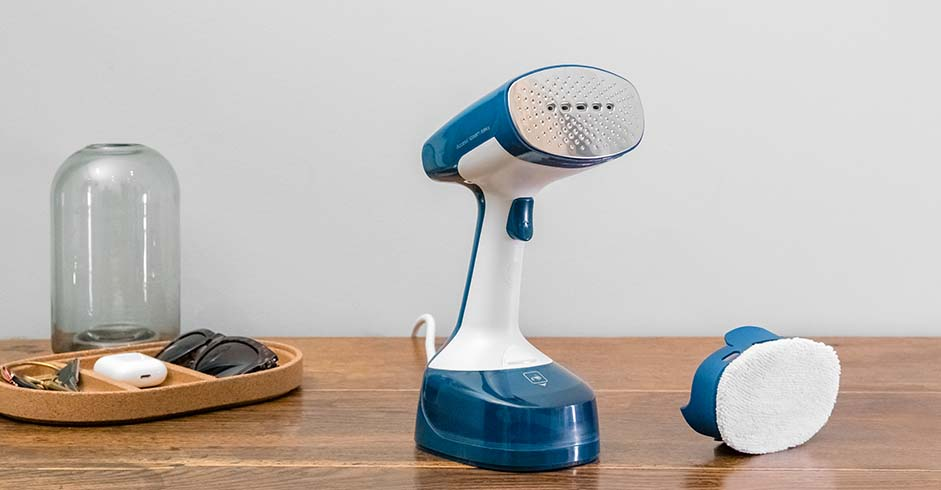
Garment steamers work on the principle of “relaxation.” They use high-temperature steam to expand and absorb moisture from the fabric fibers, thus untangling them. It’s like giving the clothes a sauna, allowing them to naturally relax under gravity. This is perfect for silk dresses, wool coats, or knitwear.
However, for cotton shirts or dress pants, what you need is “reshaping.”
This is the physical significance of an ironing board. It’s not just a frame; it’s a pressure-bearing structure. When you push the iron across the board, you’re actually doing three things:
- softening with high temperature,
- shaping with pressure, and
- quickly absorbing moisture and cooling the board to set it.
This “heat-pressing” process breaks the hydrogen bonds within the cotton fibers, forcibly pressing them into the shape you want—whether it’s a smooth placket or a sharp crease in trousers. This force cannot be provided by a garment steamer suspended in the air; only a solid board can offer it.

Real-world test: Why can’t shirts be separated from boards?
Imagine you’re trying to use a garment steamer on a shirt with French cuffs.
You hold the cuff with one hand (be careful not to burn yourself) and wave the spray nozzle up and down with the other. The result? The sleeve is indeed wrinkle-free, but the cuff is still rounded, the collar is still loose, and most importantly, you’ll never be able to iron out that signature sleeve crease that represents an elite look.
“angles.”This is the core difference between steamer and an ironing board for shirts. The soul of a shirt lies in its “angles”.
- Collar and cuffs: These areas have multiple layers of fabric and lining, requiring significant vertical pressure to press them down. A garment steamer can only make them damp and warm, but it cannot flatten that thickness.
- Placket: If the placket is uneven, it will undulate like waves when the buttons are fastened. Only by pressing it firmly on an ironing board can the front of the chest be made as smooth as paper.
- Shoulder seams and back pleats: These structural lines require you to “fit” the garment onto the pattern and use the pattern’s curvature to conform to the cut.
tool butIf you’re rethinking your home garment care routine, it’s advisable not to limit yourself to a single tool, but rather to plan a complete care system that includes a high-performance ironing board, allowing steam and pressure to each play their respective roles.

“texture.”Is it just about wrinkle removal? No, we want “texture”.
Many users ask: Do I need an ironing board if I have a steamer? If your wardrobe is full of T-shirts and sweatpants, the answer is no. But if you have even one formal outfit, the answer is yes.
“gloss.”Besides flatness, another hidden value of the ironing board is the control of “gloss”.
High-quality shirt fabric, after proper pressing, will exhibit a unique sheen. This is due to the reflection of light by the neatly arranged fibers. In contrast, garments treated with a garment steamer, while wrinkle-free, often have a “fluffy matte finish,” making them look more like “freshly dried clothes” than “freshly styled clothes.”
This is a subtle but fatal visual difference. The former suggests diligence and professionalism, while the latter suggests haste and sloppiness.
Instead of imagining the difference in texture, go and explore the actual ironing boards. You’ll discover how professional board construction works in conjunction with an iron to create this high-end feel.
Structure determines the upper limit: Don’t let your iron do useless work.
Another often overlooked technical detail: rebound and dehumidification.
When you hang clothes to iron, the steam passes through the clothes and dissipates. But on a professional ironing board, especially those with breathable mesh or even active suction, the steam is quickly guided away after it passes through the clothing.
We havehave analyzed the thermodynamic conduction efficiency behind this mechanism in our previous ironing board technology teardown. Interested readers can delve deeper into why the moment of “pressing down” is the key to shaping.
If you only use a garment steamer, moisture often remains in the fibers. You might think it’s ironed smooth, but after half an hour when the clothes are completely dry, those tiny wrinkles will quietly reappear. This is why you need a physical support surface to completely complete the “shaping” step.
Tools serve a purpose
We’re not belittling garment steamers. They’re a godsend for deodorizing, sterilizing, treating delicate silks, or quickly conditioning T-shirts.
But please don’t try to use it to fulfill the mission of an imaging board. The workplace is like a battlefield, and your image is your battle armor. When you need to project seriousness, competence, and authority, then put that board up.
edge.”Those ten minutes spent laying the shirt flat, pushing up the collar, and pressing down the sleeve seams are more than just housework; they’re a workplace ritual. It tells you, “I’m ready to face the day with my sharpest edge.
sloppy,”The next time you hesitate to unfold that bulky shelf, ask yourself: Do I want to simply “look sloppy” or do I want to “look sharp”?
FAQ
1. Now that I have a garment steamer, do I still need an ironing board?
steamer?”It depends on your wardrobe. If you frequently wear dress shirts, trousers, or garments that require pleating, the answer is yes to “Do I need an ironing board if I have a steamer”?
Garment steamers excel at de-wrinkling, but only an ironing board, combined with the pressure of an iron, can achieve pressing and create sharp lines.
2. Is it better to use a garment steamer or an ironing board to treat shirts?
In the battle between steamer and ironing board for shirts, the ironing board wins hands down.
The collar, cuffs, and placket of a shirt require high pressure to maintain a smooth and crisp appearance. While a garment steamer can smooth out large wrinkles, it cannot handle these stiff areas, easily causing the collar to slump and the cuffs to become shapeless, giving the impression of being “unwashed.”
steaming?3. What is the essential difference between pressing and Steaming?
The core difference lies in physical contact. The difference between pressing and steaming clothes is
- Steaming uses steam to relax fibers and relies on gravity to remove wrinkles, which is suitable for soft fabrics;
- Pressing uses heat, moisture, and physical pressure to forcibly reshape the fiber arrangement and uses an ironing board to cool and set the shape, which is the only way to produce “crisp.”
Related Posts

Ironing mat vs. ironing board: Do you really need that bulky board?
-
Posted by
Webb Charlotte
Your ironing board is ruining your valuable clothes
-
Posted by
Webb Charlotte
Save 30% on ironing time: Unveiling the true efficiency of heat-reflective ironing board covers
-
Posted by
Webb Charlotte
Why are ironing boards often bought but not used?
-
Posted by
Webb Charlotte
Does the Ironing Board create a sense of ritual in your dressing routine?
-
Posted by
Webb Charlotte