Uncover the truth behind odors: Is there mold lurking under the padding of your ironing board?
You may have had this moment: a sunny Sunday morning, you take out a freshly washed white shirt, ready to restore its crispness.
You turn on the steam, and the instant the heated soleplate of the iron touches the fabric—a pungent, sour smell, or rather, a “stale, damp smell,” hits you.
Your first reaction is usually to question your laundry detergent or suspect that the clothes aren’t dry enough.
So you end up having to throw the clothes back into the washing machine.
But as an observer who has been in this industry for ten years, I want to tell you a truth that 90% of families overlook: the problem is often not with the clothes, but with the ironing board that you have used for years without ever opening and checking it.
Today, we’re not going to discuss ironing techniques, but rather conduct a slightly “horrifying” hygiene dissection.
We’re going to peel back that pretty cotton cover and see what kind of health hazards lurk beneath.
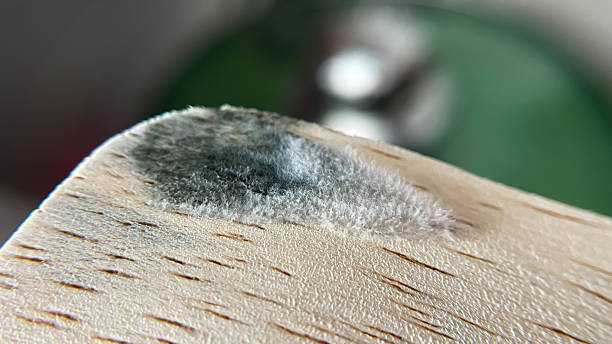
The invisible “bacterial culture dish”: Why does it smell bad when heated?
Many people think that an ironing board is just a simple metal frame with a layer of cloth on top.
But from a thermodynamic and materials science perspective, it is actually a complex heat and moisture exchange system.
When you use a steam iron, a large amount of hot steam penetrates the clothing.
Ideally, this steam should pass through the iron and dissipate into the air. However, the physical process in reality is often not so perfect.
If you smell a strange odor while ironing, it’s usually not a burnt smell but rather the smell of biological fermentation.
This is a typical “smell from ironing board when hot” phenomenon. This smell is a signal that long-accumulated skin flakes, clothing fiber residue, and most importantly—moisture—are being released under high temperatures.
The “memory effect” of foam padding
Most commercially available ironing boards have a layer of foam or felt underneath the cotton cover. This material provides cushioning, allowing the iron to move smoothly.
But there is a fatal design paradox here: in order to buffer, the material must be porous, and porous materials are precisely the best traps for moisture.
When you finish ironing and fold the board into a dark storage room, the foam pad often still retains moisture that hasn’t completely evaporated.
Darkness, dampness, and residual starch paste or clothing fibers (as food for bacteria) create the perfect environment for mold to grow.
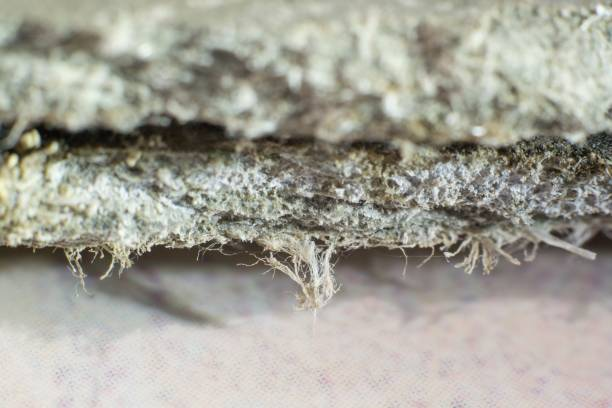
In-depth analysis: The mold crisis under the ironing board cover
A microscopic biological invasion may be taking place inside your ironing board.
This is not an exaggeration. In my career, I’ve seen countless cases where the exterior appears clean, but what lies beneath is truly appalling.
This is what we call the problem of mold under the ironing board cover.
Mold doesn’t always appear as obvious black patches. In its early stages, it may just be a faint yellow or gray stain on a foam pad.
But as the steam is repeatedly heated, the spores rise with the hot air currents and penetrate directly into your clothing.
Imagine using high-temperature steam to “sterilize” and disinfect, only to find yourself “injecting” mold spores into your shirt fibers under high pressure. This poses a completely invisible allergen risk for people with sensitive skin, especially infants and young children.
Previous reports on ironing boards have provided detailed data monitoring, showing that the concentration of particulate matter released by contaminated matting layers when heated is even higher than in some moderately polluted outdoor environments.
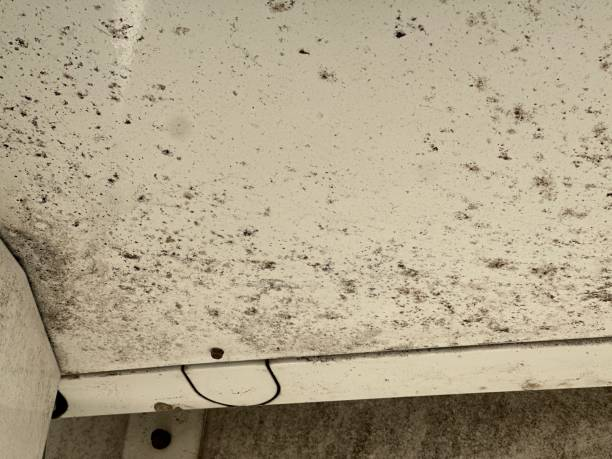
Rust: Another Silent Destroyer
Besides biological contamination, chemical corrosion is another overlooked killer.
Older boards often use a metal mesh design. Although the surface has a coating, under repeated exposure to high temperature and humidity, the coating inevitably develops micro-cracks that are difficult to see with the naked eye.
Once moisture seeps into the metal substrate, corrosion begins.
When you search for “cleaning rusty ironing board,” you might find many home remedies for removing rust using vinegar or baking soda.
But I must be honest with you: due to the special nature of the structure, once rust begins inside the mesh, it is almost irreversible.
The consequences of rusting are not limited to a decrease in structural strength (although this is indeed a safety hazard); a more direct consequence is “rust backflow.”
Rusty water can seep back into the padding with steam, eventually leaving permanent yellowish-brown spots on your expensive white silk shirt.
If you want to know what a healthy board structure should look like, take a look at actual ironing board samples and compare them with your old equipment. You will then be able to intuitively feel the huge difference between the two in terms of structural protection.
Hands-on inspection: Can your board still be saved?
Now, please put down your phone, or take it with you to your ironing board. We need to perform a “check-up.” Please follow these steps:
- Smell test: Do not heat it yet. Bring it close to the surface and smell it. If there is a musty or dusty smell, it means that the inside has become damp.
- Peeling procedure: Untie the binding cords or clips and slowly lift the outer cover.
- Warning: If you find that the padding and metal plate are stuck together, or if dust is flying when you peel them off, please wear a mask.
- Visual diagnosis:
- Observe the padding: if there are black or green spots, or if the foam has powdered, become brittle, or turned yellow or black, this is conclusive evidence that the mold is under the ironing board cover.
- Inspect the metal mesh: Check for reddish-brown rust at the mesh joints.
- Observe the padding: if there are black or green spots, or if the foam has powdered, become brittle, or turned yellow or black, this is conclusive evidence that the mold is under the ironing board cover.
When should it be thrown away, and when should it be repaired?
Here is a simple decision matrix to help you make rational judgments:
Scenario A: Only the outer cover is dirty. The padding is white and elastic, and the metal plate is shiny and new.Solution: Remove the outer cover, wash it, and let it air dry completely.
Situation B: The underlayment is moldy/powdered, but the metal plate is intact.Solution: Immediately discard the old padding and cover. Thoroughly clean the metal frame and purchase new, high-quality felt padding (preferably a wool or synthetic blend for better breathability) and a new cover.
Situation C: The metal plate is severely rusted, or the structure is shaking.Solution: Don’t try to salvage the ironing board by cleaning it. Rusty metal not only stains clothes but can also break suddenly under stress. The cost of replacement now is far less than ruining a haute couture shirt. Discard it and buy a new board.
Don’t let cleaning tools become a source of pollution.
We often say in this industry, “If the tools are dirty, the result may appear clean, but that’s a false cleanliness.”
Ironing boards are the last line of defense in your wardrobe management. Their cleanliness directly determines the hygiene of your “presentable” attire.
Don’t wait until your clothes develop an odor to start paying attention; regular “stripping checks” should be part of your household routine.
Even if it’s just so that the steam from the next ironing session brings out a fresh fabric scent instead of a musty smell, this inspection is worthwhile.
After using it next time, try not to fold it immediately. Let it stand open in a ventilated place for ten minutes. Those ten minutes could be the difference between mold growth and a healthy life.
FAQ
- 1. Why does my ironing board smell when it heats up?
This is usually a phenomenon known as “smell from ironing board when hot,” caused by moisture accumulating deep within the padding and breeding bacteria or mold. When hot steam passes through, the metabolites of these microorganisms are heated and volatilized, producing a fermented or sour odor. Additionally, inexpensive foam padding may release chemical odors when heated after aging.
- 2. What should I do if I find mold under the ironing board cover?
If mold is found under the ironing board cover, the safest course of action is to immediately discard the contaminated padding and cover. Mold spores are extremely difficult to eradicate completely with simple wiping and can easily penetrate clothing fibers during ironing. If the metal board itself is not rusted, simply disinfect the metal frame thoroughly and replace the padding assembly with a completely new one.
- 3. Is a rusty ironing board worth cleaning and repairing?
While there are many online tutorials on cleaning rusty ironing boards (such as using rust removers), it’s difficult to completely remove rust from a lattice-patterned board. Tiny rust residue can seep back into clothing with steam, staining it yellow. If the rusted area is large or located in the core ironing zone, replacing the board is a more cost-effective option to protect your garments.
Related Posts

Why is your ironing board always making a “squeaking” sound? 3-minute silent repair guide
-
Posted by
Webb Charlotte
Your ironing board is ruining your valuable clothes
-
Posted by
Webb Charlotte