Let’s start with that embarrassing moment:
As you walk into the storage room or push open the bedroom door, your eyes sweep over the large object leaning against the corner. It’s piled high with unfolded T-shirts collected this week, two mismatched socks, and even a cat that inexplicably ended up on top of it.
That once-glamorous ironing board now looks more like an expensive, padded shelf.
If you reach out and touch its surface, you will feel the dust accumulated on the cloth cover, rather than the warmth and smoothness you would expect from being ironed by high-temperature steam.
Why do we fantasize about conquering the world in a crisp shirt in the mall but then prefer to wear a wrinkled hoodie at home rather than straighten it out? Today, we’ll analyze this typical home purchase regret.
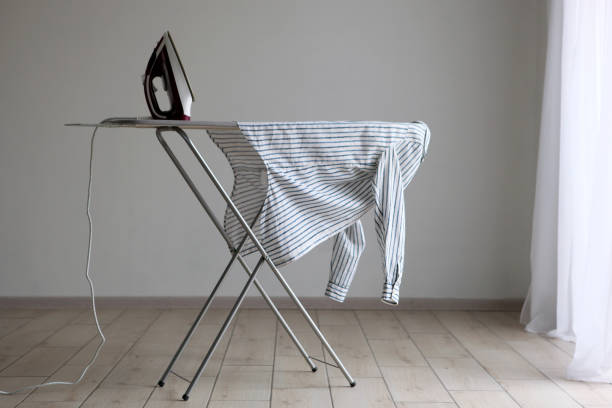
The friction between the imagined “perfect self” and the reality of physics.
When we buy an ironing board, we are not actually buying a tool but rather an “ideal version of ourselves.”
In IKEA or Target’s showrooms, the lighting is a carefully designed warm tone, and the display panel is placed in such a perfect laundry room setting. Looking at it, you picture yourself living an organized life, impeccably dressed.
In marketing, we call this “projective consumption.” The merchant isn’t selling you two metal plates and a cotton pad; they’re selling you an “efficient middle-class lifestyle.”
But once you bring it home, the real-world friction begins.
Here’s a detail that most people overlook: startup costs.
Try to recall the process of setting up a standard ironing board. You have to drag it out of that narrow gap; the metal legs are incredibly heavy, and the cheap spring clips make a sickeningly loud “squeak” as you try to pull it open.
Sometimes, the rusty adjustment lever will pinch your fingers hard, and that piercing pain can instantly extinguish all your enthusiasm for the task.
This poor tactile feedback—the coldness of the metal, the instability of the center of gravity, and the difficulty in opening—subconsciously sends you a signal: It’s too much trouble; I’ll do it next time.
Thus, this unused ironing board naturally became a makeshift clothes rack. Because it was “horizontal, tall, and within easy reach,” it was much more humane than putting it away and then taking it out again.
An industry insider revealed: Many low-end brands never considered “ease of use” when designing their ironing boards. To cut costs, manufacturers use thin, unstable tubing and then cover the unevenness of the board surface with thick, cheap foam padding.
They’re betting that you’ll rarely use it after buying it, so even if it’s wobbly, you won’t return it for only two or three uses a year.
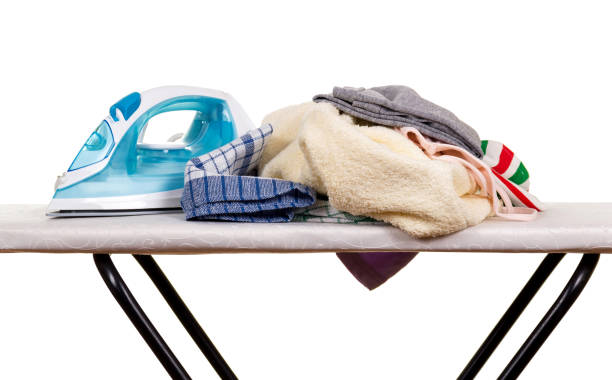
Fabric Revolution: Your Wardrobe No Longer Needs It
Beyond psychological laziness, there’s a much larger shift in household tool behavior: our clothes have changed, but our tools remain stuck in the last century.
The ironing board is a product of the cotton and linen era. In those days, if your Oxford shirt didn’t have that sharp crease, you would be considered unseemly.
But what about now? Open your closet and take a look.
- Lycra
- Modal
- wrinkle-free polyester
- high-tech quick-drying fabrics
The greatest achievement of the modern garment industry is the invention of “wrinkle-resistant fabrics.” DTC brands often use “easy care” as a core selling point in their advertising. Nowadays, young people, and even many business professionals, can wear 90% of their clothes after washing and shaking them out.
Since the clothes no longer wrinkle, why do you still keep a huge ironing board?
This is a typical example of “habitual consumption.” Your parents have an ironing board, so you feel that you should have one too after you start your own family. But in reality, the function of this board has been greatly marginalized in modern families.
At this point, what we need to do is declutter or upgrade our ironing board.
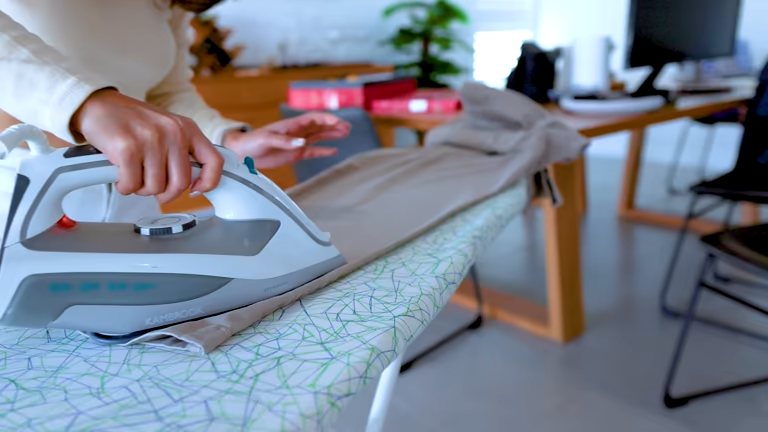
Spatial psychology: It’s a huge “visual noise.”
What bothers you about this board is that it’s a huge space invader.
In a city apartment where every inch of space is precious, unfolding a 1.2-meter-long ironing board means you’ll almost take up half the living room or the entire hallway. It disrupts the flow of movement within the living space.
Worse still, because it’s so difficult to store (think of that clip that pinches your fingers), most people choose to leave it standing there.
This creates a psychological cue: as long as it’s there, it means I have chores to do.
This constant, silent pressure can make you feel repelled by that corner. You’ll subconsciously avoid that area or simply pile more clothes on top, trying to bury this “visual noise.” It’s a very interesting psychological defense mechanism.
True organizational wisdom lies not in buying the best storage tools, but in eliminating the tools that create the source of chaos. If a tool not only fails to solve your problem but also creates new chaos (piles of clothes), then it is a liability.
FAQ (Frequently Asked Questions)
Q1: If I really need to iron a shirt, what options are there besides the traditional ironing board?
A: For 99% of modern people, a handheld steamer is the perfect alternative. It preheats in just 30 seconds, doesn’t require a huge steamer rack, and you can operate it simply by hanging your clothes on a doorknob.
While it can’t create those sharp creases on trousers, it’s perfectly adequate for everyday wrinkle removal. More importantly, it eliminates the huge psychological barrier of “setting up a steamer rack.”
Q2: I’ve already bought an expensive ironing board, and I don’t want to throw it away. How can I make use of it?
A: If you don’t want it to become an unused ironing board, you have to give it a “fixed home.” Don’t fold it up and stuff it in a crevice, or you’ll never take it out.
If you have a walk-in closet, keep it unfolded and use it as a dedicated “folding workbench,” not just for ironing. When it has a fixed location that doesn’t obstruct movement, its usage rate increases by 300%.
Q3: Why are those small desktop ironing boards that cost only a few dozen yuan also difficult to use?
A: This is a classic home purchase regret trap. Tabletop irons seem space-saving, but they’re usually too light, and the board will move when you push the iron hard.
And because they’re so short, you have to drag the clothes around repeatedly when ironing trousers or skirts, creating new wrinkles. Physics tells us that tabletop irons are often a worse experience than floor-standing ones due to their lack of a stable grip.
Conclusion
When we examine an ironing board, we are actually examining our lifestyle.
The era of “slow living,” when we were willing to spend half an hour setting up a board, spraying water, and meticulously ironing every inch of fabric, may be gone forever.
This is not a pity; it is an evolution of efficiency.
Next time you look at that shelf piled high with clutter in the corner, don’t feel guilty. It’s not laziness; it’s the inevitable result of the clash between old-fashioned tools and the pace of modern life.
If it truly no longer serves you, then give it to someone who really needs it (such as a professional tailor or patchwork enthusiast).
Dedicate your precious living space to things that truly bring you joy, not stress.
After all, life is already wrinkled enough; we don’t need a heavy ironing board to constantly remind us of that.
Related Posts

Garment Steamer vs. Ironing Board: Want a shirt with sharp, defined edges?
-
Posted by
Webb Charlotte