In many households, when the ironing experience is unsatisfactory, people often instinctively attribute the problem to the steam iron itself: the steam is not strong enough, the temperature control is not precise enough, or the steam output rhythm is unstable. However, in many real-world usage scenarios, a more often overlooked but far-reaching factor is that the steam iron does not work independently; its performance is highly dependent on the ironing board it is paired with.
Ironing is not essentially an action performed by a single device but rather a system comprised of heat release, steam conduction, pressure feedback, and a supporting structure. When there is a lack of coordination between the iron and the ironing board, even if their individual performance is not bad, the combined efficiency and shaping effect will significantly decrease.
This article does not discuss specific brands or models but rather systematically breaks down the pairing relationship between the ironing board and the steam iron from the perspective of structural adaptation and usage logic, helping users understand what combination can reduce energy loss and improve shaping quality in actual ironing.
Why didn’t the experience improve significantly after upgrading the iron?
A fairly common phenomenon is that after steam irons are upgraded, the ironing experience does not improve as significantly as expected. The steam output is greater, and the parameters seem more advanced, but clothes still easily become damp, creases need repeated treatment, and the overall process remains time-consuming.
The problem often lies not in the iron itself, but in the ironing board’s inability to effectively coordinate with steam release.
When steam comes into contact with fabric, it quickly penetrates the fibers. If the fabric structure lacks ventilation channels, the steam will be trapped between the garment and the fabric, re-condense, and seep back into the fabric. In this case, the steam does not actually participate in shaping but only increases the humidity burden.
This is precisely the root cause of the differences in the effects of many steam iron and ironing board combinations. Whether the steam is “caught” and discharged is often more important than the amount of steam itself.
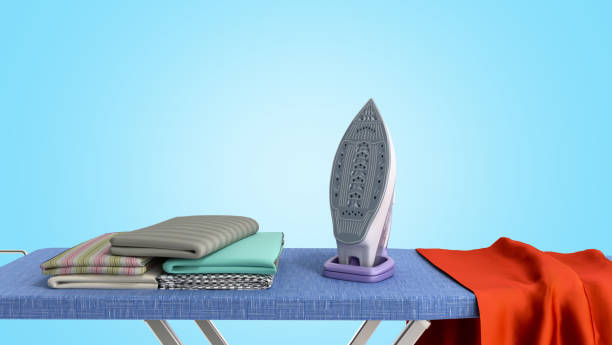
The steam path determines the upper limit of ironing efficiency.
From a usage perspective, the efficiency of a steam iron depends not only on its output capacity but also on the smoothness of the steam’s movement path throughout the system.
Ideally, steam should quickly leave the working area after softening the fabric fibers, allowing heat to be concentrated for setting rather than circulating at the bottom. A well-structured ironing board typically has a clear venting path between the top and bottom layers, allowing steam to naturally descend and dissipate quickly.
Multiple home appliance tests and user comparisons show that, under the same steam output conditions, different ironing board structures have a significant impact on ironing time and rebound rate. This is why the same steam iron will provide completely different user experiences on different ironing boards.
Pressure transmission is often overlooked, but it directly affects the molding effect.
When discussing the best iron for an ironing board, steam parameters are often repeatedly emphasized, but in actual use, whether the pressure is effectively transmitted to the fabric structure is also a decisive factor.
The steam softens the fibers, but the actual shaping is achieved by the pressure between the iron and the ironing board. If the ironing board is too elastic or the internal filling cannot provide stable support, the applied pressure will be partially absorbed, thus reducing ironing efficiency.
This is why some users feel that “the iron is fine, but it can’t flatten the clothes.” The problem isn’t with the iron itself, but with the iron’s surface failing to provide sufficient pressure feedback so that the pressure actually acts on the clothes.
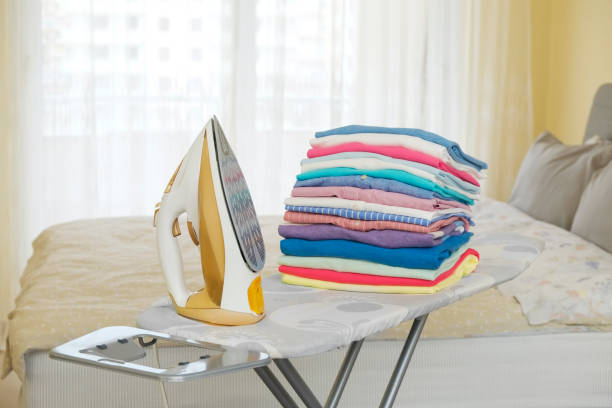
The pairing logic is determined by the use case, not by the parameter levels.
There is no single ironing board and steam iron combination that works for everyone. The truly effective combination often depends on the everyday usage scenario.
For example, when frequently handling highly absorbent fabrics such as cotton and linen, steam dissipation efficiency becomes crucial, while when ironing suits, wool, or more structurally robust garments, stable support and pressure feedback on the ironing board are more important.
Many long-term users have mentioned in their experience sharing that when the space they use, the type of clothing they wear, or the frequency of ironing changes, the steam iron and ironing board combination that was originally “good enough” begins to feel less convenient. This is not due to equipment degradation but rather a shift in the usage scenario.
The implicit relationship between height, stability, and operating rhythm
While the height adjustment and overall stability of the ironing board do not directly participate in steam release, they indirectly affect the iron’s performance through human operation.
When the iron is not at the right height, users often unconsciously change the angle of their wrist or the direction of pressure, resulting in uneven steam distribution and frequent interruptions to the rhythm of the iron’s movement. In the long run, this subtle discomfort can significantly reduce overall efficiency.
When the ironing board and steam iron work well together, the operating rhythm becomes natural and smooth, with steam release, movement, and shaping requiring almost no deliberate pauses. This smooth experience is often the true source of user satisfaction.
Rethinking the meaning of “upgraded pairings”
A common misconception is that user experience issues are simply attributed to “the need for a stronger iron.” However, in many real-world cases, users have found that by re-evaluating the structure and usage of their existing ironing boards, they can significantly improve ironing results simply by optimizing the pairing logic, without needing to replace the core equipment.
This is why some professional housekeeping content emphasizes a systemic perspective rather than focusing on individual upgrades.
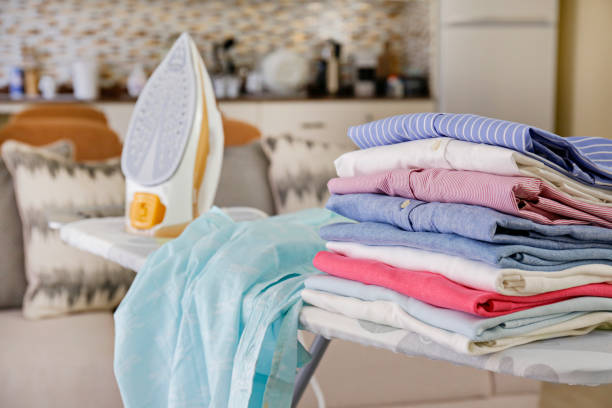
The essence of coordination is to reduce energy and movement losses.
Essentially, the best pairing of an ironing board and a steam iron is not about pursuing higher parameters but about reducing unnecessary wear and tear.
Steam is not trapped, pressure is not negated, and the action is not interrupted. When these conditions are met simultaneously, ironing transforms from a chore requiring patience into a process with a clear rhythm and definite feedback.
This is also a key turning point that many experienced users mention when reviewing changes in their usage: it’s not about changing a particular device, but about finally getting the tools to “work together.”
Before the next ironing, re-evaluate this combination.
Before your next ironing session, perhaps it’s worth setting aside your focus on a single performance parameter and instead observing the interaction between the ironing board and the steam iron. Is the steam dissipating smoothly? Is the pressure being effectively transmitted? Is the operation natural and seamless?
You might find that what truly determines the ironing experience isn’t a particular “better” tool, but rather whether they operate within the same set of usage logic.
Are the Steam Iron Ironing Boards you’re currently using truly meant for each other?
Or are they just placed together by chance?
Related Posts

Save 30% on ironing time: Unveiling the true efficiency of heat-reflective ironing board covers
-
Posted by
Webb Charlotte