The reason why the usage frequency of ironing boards is underestimated.

ironing boards.Many families have Ironing boards .
The problem is that most of them exist but are not used.
ironingThere are ironed shirts in the closet, and the washing machine is running normally, but the iRoning board sits for a long time in a corner, under the bed, or deep in the storage room. It’s not that no one realizes its value, but rather that its appearance is constantly “delayed” in daily life.
This is a classic example of an underestimation of usage frequency.
It’s not that people don’t use ironing boards at all, but rather that the frequency of ironing board use is suppressed by a combination of factors.
,This article delves into the real reasons why it’s difficult to form an ironing board habit from three dimensions: placement path, usage threshold, and psychological cost , and proposes actionable optimization ideas to help this tool return to our daily routines.

The first overlooked hurdle: the placement path determines whether it will be used.
TheIn behavioral science, a fundamental conclusion has been repeatedly verified:
the frequency of use is often determined before it is even used.
For an ironing board, the deciding factor is the “placement path.”
The common situation in reality is
- The ironing board was folded and stored in an area not frequently used for traffic.
- You need to move around the furniture and make room to retrieve it.
- After use, the items must be “completely put back in their place,” otherwise it will affect the overall tidiness.
These conditions together constitute an unfriendly path.
From a user experience perspective, the more complex the path, the more easily the brain categorizes it as a “high-cost behavior.” Even something as simple as taking a few extra steps or moving an extra chair can subconsciously diminish the willingness to use the service.
Some studies on household chores indicate that
When tools are not within easy reach, their actual usage frequency may decrease by more than 40%.
This explains a common phenomenon:
People don’t avoid using ironing boards but rather “only use them when absolutely necessary.”
The barrier to entry is not a functional issue but rather a startup cost issue.
Functionally, the logic of the ironing board is very clear.
The question isn’t “how to use it,” but rather “whether to start using it at all.”
A typical startup process includes:
- Find and unfold the ironing board
- Adjusting height and stability
- Plug in and wait for the iron to preheat.
- Find the clothes that need ironing
Each step individually is not complicated, but when put together, they form a task with a significantly high start-up cost.
Behavioral psychology calls this phenomenon “priming friction.”
When the priming friction of a behavior is too high, people will procrastinate even if the behavior itself does not take much time.
In many user discussions about ironing board habits, similar feedback is frequently seen:
“It’s not that I don’t want to iron; it’s just that I feel now is not the ‘right time.’”
This “opportunity” rarely comes naturally.
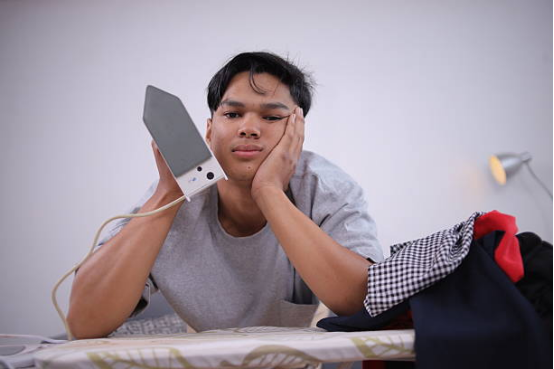
The psychological cost is the core reason why ironing boards are left idle.
If the placement path affects “whether it can be used,” and the usage threshold affects “whether one is willing to start,” then psychological cost determines “whether it is worth using.”
The psychological cost of ironing clothes is mainly reflected in three aspects.
First, results cannot be accumulated.
Ironed clothes will wrinkle again during wearing and storage. There is no long-term link between effort and reward.
Second, the results are not immediately apparent.
Unlike cleaning countertops or tidying up a room, ironing clothes does not immediately change the state of the entire space.
Third, standards are easily exaggerated.
Once ironing begins, people often unconsciously pursue “perfect flatness,” which increases psychological pressure.
This is also the fundamental reason why many people underestimate how often to use an ironing board:
The psychological reward is insufficient to cover the behavioral cost.
Idleness does not mean uselessness, but rather that there is a problem with the habitual structure.
From a data perspective, the ironing board is not a “discontinued” tool.
In multiple home furnishing consumer surveys, it is still listed as one of the essential household items, especially in families that require formal attire, where its ownership rate is not low.
However, there is a clear gap between “owning” and “forming a habit.”
The ironing board habit is difficult to establish, usually not because it is not functional, but because it is not naturally embedded in one’s life routine.
In other words, it is often seen as an “isolated event” rather than part of a chain of daily behaviors.
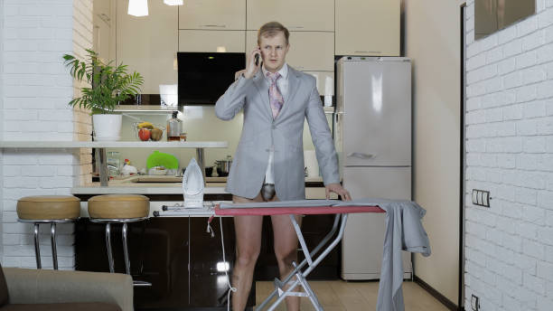
Three optimization strategies led to a natural increase in usage frequency.
If the problem lies at the structural level, then the solution should return to the structure itself, rather than relying on self-discipline.
First, optimize the placement path
by treating the ironing board as a “high-frequency tool” rather than a “backup item.” Shortening the path significantly increases the likelihood of use.
Secondly, it lowers the barrier to entry
and reduces the preparation steps required for each use so that “starting ironing” is no longer a complete ritual but a follow-up action.
Third, reconstruct psychological expectations
by adjusting the ironing goal from “perfectly flat” to “sufficiently presentable.” When the standard is lowered, the completion rate will actually increase.
These adjustments do not change the tool itself, but they can substantially change how often the ironing board is used.
Signals of change observed from real user feedback
In some lifestyle communities, a trend has been observed:
People are beginning to redefine the meaning of ironing.
It’s no longer about “ironing all the clothes.”
but about “making the clothes look appropriate for key situations.”
This shift in perception is gradually reducing the psychological burden on the ironing board and allowing it to re-enter the daily usage sequence.
FAQ (Frequently Asked Questions)
Q1: Why do I rarely use an ironing board even though I have one at home?
Because the placement path is complicated, the start-up threshold is high, and the psychological reward is low. These three factors combined reduce the frequency of use.
Q2: How often should you use an ironing board to be considered normal?
There is no single standard; the key is whether it matches your personal clothing needs and lifestyle.
Q3: Do modern fabrics make ironing boards unnecessary?
While some fabrics do reduce the need for ironing, they haven’t completely eliminated the use cases for ironing boards.
Q4: Can habits really be rebuilt?
Yes, but only if the structure is adjusted first, rather than forcing the behavior.
What’s being underestimated isn’t the tool itself, but its position.
The frequency of use of an ironing board is not determined by the product itself but by its “place” in life.
When the placement path is smoother, the barrier to entry is lower, and the psychological cost is more controllable, many people will find that
They are not actually opposed to using an ironing board, but they just haven’t given it a reasonable place in the past.
Perhaps it’s worth asking:
If it’s really that “useless,” why does almost every family still keep it?