
Vintage clothing is something that can bring peace to the touch: a gentle squeeze, and the fibers left by those ages seem to echo. But truly preserving the soul of a vintage garment is far from romantic. It requires stable, gentle, and precise care; otherwise, it might collapse, deform, or fade in a second under high-temperature steam. And behind all this seemingly delicate process, the role of the ironing board is often underestimated.
Especially in the case of vintage clothing ironing, the stability of the support surface, the balance of heat conduction, and the control of the direction of force on the textile all affect whether an old garment can continue to “live.”
If you’re caring for a 1940s dress, a pair of 1970s flare pants, or a wool sweater with natural creases, then for the next few minutes, focus your attention on this seemingly ordinary yet crucial tool.
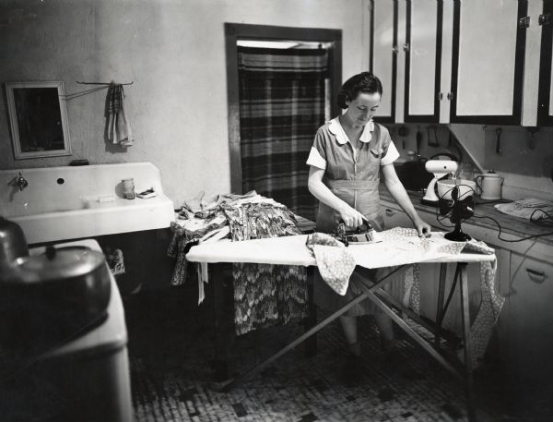
The fragility of vintage fabrics and the importance of stable support
Vintage clothing is special. Not in the sense of being “expensive,” but in the sense that the fibers have aged, their moisture content has changed, and the stitches are more prone to breakage. Restorers in the industry often mention one thing: old textiles are most vulnerable to unstable pressure points. Hasty movement, sudden changes in ironing direction, and shaking ironing boards can all damage the fabric.
Therefore, nursing experts emphasize that the importance of the entire process goes beyond just the iron; it’s about the entire contact surface—the flatness, shock resistance, cushioning layer, and heat dissipation capabilities of the ironing board. This stability determines whether retro garment care can be carried out in a “gentle and controlled” manner.
Some professional restoration studios even replace the outer layer of the ironing board with a thicker one, allowing the gentle ironing surface to support the old textiles more evenly in order to reduce the point pressure that is invisible to the naked eye but can actually damage the fabric.
When you gently lay out a vintage shirt, if the surface of the ironing board is soft but doesn’t collapse, and the board supports the fabric and allows steam to penetrate more gently, it greatly reduces the risk of wrinkles being “ironed to death” by localized high temperatures.
Temperature control and steam management: core variables in nursing vintage
Vintage fabrics have a narrower temperature tolerance range than modern surface materials, a point that has been raised numerous times in user feedback. Silk, acetate, old cotton, and old wool—even though they are all natural fibers—age in completely different ways.
Experienced collectors use a very slow pace to care for vintage clothing ironing:
First, lay it flat → test the temperature → apply a small amount of steam → fix the stretch direction → iron in sections.
This entire process relies on temperature control to “soften” the steam and an ironing board to “relax” the garment.
Once the two are coordinated, they can protect the original supporting structure of the fibers, such as the folds of old times, the natural drape, and even the posture of the seams.
A detail often mentioned in industry discussions is that
if the steam is too concentrated, “watermarks” will appear on the lightweight yarn material;
if the support surface is too hot, the nylon may shrink slightly in the early stages;
And if the board surface is too hard, the wool will be pressed into shiny spots.
Therefore, retro garment care is not actually about “ironing,” but rather about reshaping the fabric.
The precision of this shaping process depends heavily on whether the cushioning layer of the ironing board is gentle enough and whether the heat dissipation of the board is even.
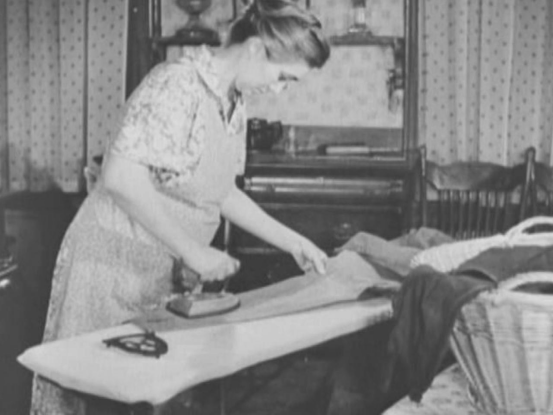
The relationship between different retro materials and support surfaces
Vintage clothing comes in a wide variety of materials—chiffon, old cotton, vintage silk, 80s-style wool blends, and even handmade lace.
It sounds romantic, but when you iron it, you realize that behind the romance lies a lot of unpredictability.
To make it more intuitive, let’s look at a few typical scenarios:
1. Slight stretching issues with old silk
Silk softens when heated, and if the ironing surface is too smooth or too soft, the fabric can slip.
This may seem like a minor issue, but it can cause the garment to deform, especially around the shoulders and neckline.
2. Risk of fiber brittleness in old cotton fabric
Old cotton fabric is more prone to developing “translucent cracks” at high temperatures than modern cotton.
A stable board surface allows steam to spread more evenly, preventing damage caused by sudden heating in one area.
3. Indentations and shiny spots on wool fabric
The surface oils of vintage wool have been lost, and if the fabric is too stiff, “sparkling spots” will appear.
A gentle ironing surface can significantly reduce this risk.
Protecting structural integrity: more than just ironing out wrinkles
When caring for vintage clothing, the real challenge isn’t ironing out a wrinkle but preserving its original structure. For example:
- The skirt hem must retain its original wave shape.
- The direction of the stitches must not deviate due to uneven pressure;
- The retro curve of certain shoulder lines cannot be pressed into a straight line;
- Lace patterns should not collapse due to concentrated steam.
At this point, the supporting performance of the ironing board is almost equivalent to that of a “structural protector.”
Industry repair technicians often mention a key point:
Old fibers need to be “restored lying down” rather than “forced flattened.”
“A good board surface allows steam to “bend gently through the fibers” rather than “force them to rearrange.”
Using rhythm and the details of human movement: Small movements determine longevity.
Vintage clothing care isn’t about brute force but about rhythm.
Industry restorers have summarized five key principles that have been validated by almost all professionals:
- When ironing, pause and place the iron on the ground. Do not slide the iron.
as this will pull on old fibers, especially aging seams. - The more stable the support surface, the easier and more controllable the movements.
An unstable board will make you subconsciously “add force,” which is harmful to vintage. - Ironing on the reverse side is safer than ironing on the front
, mainly because old fabrics have less surface oil, making them more prone to shiny marks. - Sectional ironing is better at preserving the shape than overall ironing.
Vintage clothing is often asymmetrical, so detailed sectioning is more reliable. - The steam should be applied slowly. Do not spray
the old material continuously. The reaction of the old material is a few seconds slower than that of the new material. You need to wait for them to “absorb” the steam.
You’ll find that all these details are deeply integrated into the user experience of the ironing board.
Stable support prevents unnecessary torque during movement.
A soft surface allows your steam to slowly penetrate the fibers.
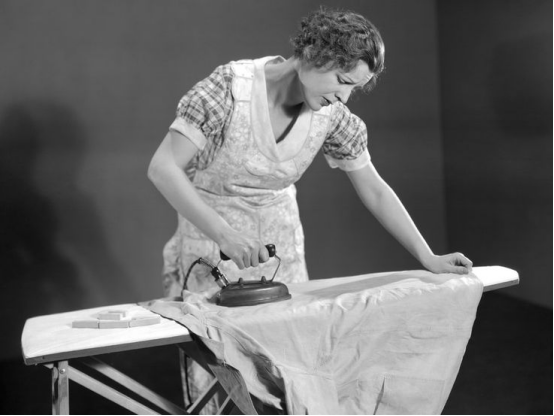
Real-world experience from the collector community: Why the board is more noteworthy than the iron
In vintage clothing forums (such as VFG and Reddit Vintage Repair), there is a topic that has been discussed repeatedly for a long time:
“Why is it that with the same iron, some people can restore a vintage skirt to look like it’s on a magazine cover, while others end up with an irreversible wrinkle?”
The answer is often not the iron, but the interaction between the support surface and steam management.
Several frequently mentioned real-life experiences:
- One collector mentioned that after the thicker boards were installed, the old silk no longer curled at the edges due to excessive steam.
- Another user said that the wide panel prevented him from repeatedly moving the fabric when caring for his 1950s A-line skirt.
- Some users also said that the smooth surface layer reduced the occurrence of “highlight areas” on wool coats.
All this feedback points to the same thing:
The underlying logic of vintage clothing ironing is not high temperature but “stability, gentleness, and uniformity.”
The psychological rhythm of the nursing process: Slow down, and the clothes will echo.
In vintage clothing care, people often describe it as “helping the clothes breathe.”
Steam rises, the fabric stretches, and the fibers relax again; it feels less like housework and more like restoration.
This actually reveals an industry consensus:
Vintage clothing doesn’t rely on physical care but rather on rhythm and environment.
Stable support helps stabilize your hand;
A gentle surface provides feedback on your movements.
and even heat conduction prevents steam from becoming “emotional.”
The whole process is like a slow-paced conversation.
You press down on the fabric, and it responds with a touch of softness.
You lift the iron, and it slowly returns to its shape.
A good ironing board provides a steady rhythm in this “conversation.”
Retro skincare is an art of patience.
If modern garment care emphasizes “efficiency,” then retro garment care represents a different philosophy.
It’s more like shaking hands with time, attempting to preserve a piece of history in a gentle way.
Therefore, when caring for vintage clothing, don’t just focus on the steam intensity or iron power.
More often than not, what truly determines success or failure is the
ironing board that is directly connected to your movements—it plays a triple role of protecting the structure, regulating heat, and stabilizing the rhythm.
Learn more about ironing boards in articles; they contain many details that will make the care process easier.
Finally:
What’s your biggest worry when caring for vintage clothing?
Fabric deformation, steam stains, or structural collapse?
Feel free to tell us; perhaps your concerns will inspire our next post.