Highly efficient ironing techniques are recommended for housewives, to be used in conjunction with an ironing board.

When dealing with a pile of housework, ironing is always the “most inconspicuous, yet most time-consuming” step. Clothes pile up, steam hisses, and the weight of the iron presses back and forth on your wrist. If you repeat these actions every day, a handy, stable ironing board suitable for your household needs becomes a true “time-saving tool.” But efficiency doesn’t just come from tools. Many housewives overlook the fact that ironing techniques themselves can shorten what would normally take 40 minutes to about 20. Regularly cleaning the board, adjusting the steam ironing setup, and finding the right angle for the clothes can subtly change your pace.
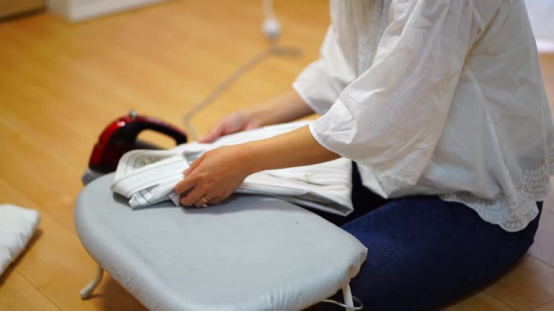
The “hidden burden” of housework is amplified starting with ironing boards.
lines,Most people think ironing is just “smoothing clothes,” but housewives often face a completely different picture: their children’s school uniforms have ridiculously deep wrinkles, their husbands’ shirts need crisp shoulder lines; and their own clothes have many more details, such as ruffles, cotton and linen materials, and breathable fabrics. The busier they are, the easier it is to overlook the condition of the ironing board, and the easier it is to tolerate those minor, awkward stops.
Interestingly, housework doesn’t “wait until you have time to do it.” The more you put it off, the more it accumulates. So people tend to focus on the iron itself but rarely pay close attention to the ironing board that actually supports it throughout the entire process. Is there any thinness in its fabric? Is the steam distributed evenly? Are there any stuck points when adjusting the height? These small, everyday differences are magnified in the high-frequency housework.
Therefore, efficiency is never achieved through one-time changes but rather through the accumulation of small details every day. Especially in the context of ironing boards, all techniques ultimately boil down to: “Have you ensured that the steam, pressure, and fabric work along the shortest path?”
The core logic for improving ironing efficiency lies in temperature, steam, and angle—these three factors are more than just parameters in the rhythm of housework.
Ironing speed depends on a very real physical process: fibers are heated, moistened, and then reshaped. Therefore, the proper structure of your steam ironing setup directly affects your daily working hours. There’s a consensus in professional laundries—more steam isn’t necessarily better; even distribution is key.
Three common “efficiency killers” in reality:
1. Steam buildup.
If steam is sprayed for too long without being moved, the clothes will become soaked. Pressing down at this point will only cause the fibers to “collapse” instead of straightening, and repeated operation will naturally take more time.
Second, the ironing board surface is uneven.
After a period of use, the supporting foam on some boards may sag slightly, especially in the center area. Each time you press down on the iron, the heat is unevenly distributed, making the wrinkles more stubborn.
Third, incorrect angles lead to repeated processing.
Laying clothes too carelessly results in a typical situation: you iron the right side, and a new crease appears on the left. Housewives understand this frustrating moment all too well.
Therefore, it is often said in the industry, “Temperature determines speed, steam determines smoothness, and angle determines efficiency.”
The real significance of an efficient ironing board lies in its ability to make these actions work together—not in the price of the board, but in its ability to coordinate ironing movements and reduce repetitive work.
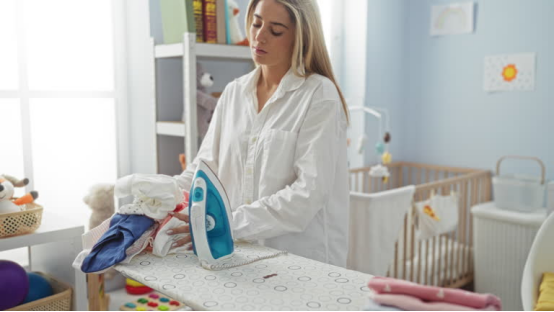
The most often overlooked skills in housewifeship—cleaning, rhythm, and board layout—have a far greater impact than imagined.
Let’s look at some real-world examples—after all, what truly affects efficiency isn’t theory, but life itself.
1. Regularly cleaning the ironing board is more crucial than you might think.
Many housewives know how to wipe an iron, but very few think to wipe the iron itself.
A fabric that hasn’t been cleaned for a long time can cause three problems:
- Uneven heat absorption by fiber dust
- Steam vents were blocked by fabric debris.
- Moisture buildup in the fabric causes localized softening.
So you’ll see a familiar scene: the clothes are ironed, but they always feel “not neat enough,” as if they’re missing a crucial element.
The recommended method is simple:
Once a week, gently wipe the board surface with warm water and a small amount of neutral detergent, then let it air dry. The more regular the action, the more efficient it will be.
2. Iron in sections, instead of ironing “one piece from beginning to end.”
Professional ironers often use a rhythm of shoulder line—back—front—details.
This is because the movements are more fluid and avoid repeatedly adjusting the position of the garment. The same applies to housewives using an ironing board.
Especially for shirts and uniforms—ironing them by section can save about 30% of the time.
3. The more stable the panel structure, the faster the movement.
This point is often overlooked, but it’s one of the core elements of an efficient ironing board.
A stable board surface directly reduces “shaking.”
And what does shaking mean? It means you can’t complete a straight press in one go and need to rearrange the fabric.
If you find yourself constantly having to “do it again” for no apparent reason, the board is likely the real reason.
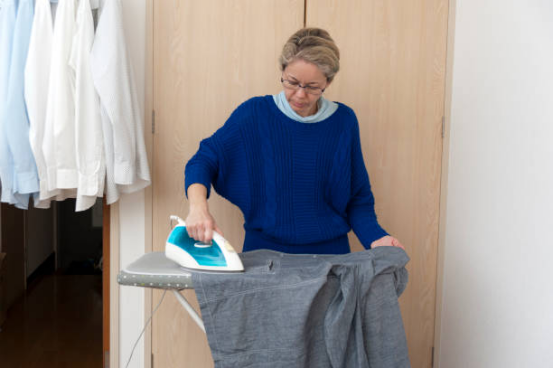
Integrate efficiency into your life: there are optimal strategies for height adjustment, clothing order, and steam settings.
Learning techniques isn’t difficult; the challenge lies in integrating those techniques into your daily actions. Why not start with three small, high-return actions?
1. Find the “golden height” that prevents wrist fatigue.
Many housewives are unaware that the height of the ironing board determines whether you’ll experience a stiff neck and shoulders after 10 minutes.
A simple industry-recommended formula is
board height ≈ slightly above waist level (5-10 cm).
Too low, and you’ll bend over; too high, and your wrist angle will become unnatural.
Once you find this golden height, you’ll immediately realize that ironing is no longer something your body has to “endure.”
2. Arrange clothing items in order of material.
Steam conditioning is key to saving time. The correct order is as follows:
- Lowest temperature: chiffon, silk
- Medium temperature: cotton blend, thin cotton
- High temperature: Oxford cloth, thick cotton
If you get the order wrong, you’ll keep adjusting the temperature and waiting for it to cool down or heat up again. Time will just slip away little by little like that.
3. Shake out clothing as much as possible beforehand to reduce creases.
Industry workers follow a routine when preparing uniforms: gently pull open the seams to let the fabric hang naturally.
This action reduces creases by about 20% and also allows for more even steam distribution during steam ironing setups.
This is the kind of technique that you “can’t live without once you start.”
Ironing shouldn’t be tiring but rather a skill that allows you to control your pace.
When housewives face repetitive daily chores, what truly brings about change is never a single item, but a whole set of “smarter actions.” The significance of an ironing board is not to be the main element but to help you expend less effort and save more time in this process.
Explore more ironing board tips or other practical guides for home use that might make your next ironing session a little easier.
So, which of the changes mentioned in the article will you try next time you iron clothes?