
Many household chores aren’t actually time-consuming, but they are incredibly patience-draining. Ironing clothes is one of them.
On the surface, it’s just about smoothing out wrinkles, but in reality, the ironing board often carries a much-needed psychological burden. The resistance begins even before the clothes are unfolded.
Why is this?
Why do people, despite understanding the value of “neatness and appearance,” still instinctively resist ironing?
If we break it down from a behavioral psychology perspective, we’ll find that the problem isn’t just about “how hot the iron is,” but rather how tools, processes, and space collectively shape the experience of doing housework.
This article attempts to answer a seemingly mundane but actually complex question: why do people hate ironing, and how can this resistance be reduced by changing habit structures rather than forcing willpower?
Table of Contents
Resistance is not laziness but the accumulation of psychological friction.
Many people simply attribute their dislike of ironing to laziness, but from a behavioral science perspective, this is a misjudgment.
The real reason is the excessively high friction cost.
Every step of ironing clothes creates tiny resistance:
- Find the ironing board
- Unfold, level, fix
- Plug in, preheat, wait
- Processing one by one
- Cooling, storage, and return to their place
These actions, when viewed individually, are not difficult, but when combined, they form a typical high-start-cost task. Behavioral psychology research indicates that people’s aversion to tasks tends to be concentrated “before starting,” rather than during the execution process.
In other words, what people really resist is not ironing itself, but the act of “starting to iron clothes.”
In many discussions around the psychology of ironing routines, users repeatedly mentioned a common point:
“It’s not that I don’t want to iron, but that I don’t want to face the whole preparation process.”
This is precisely the result of the continuous accumulation of psychological friction.
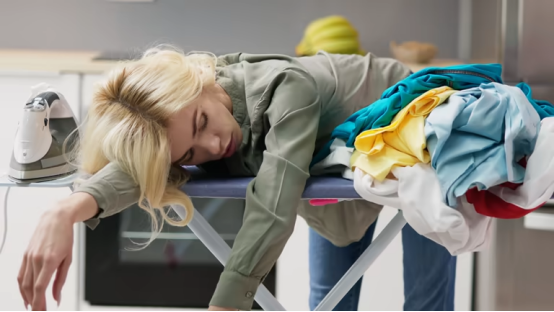
The ironing board’s strong presence actually became a burden.
In most households, an ironing board is not a readily available tool but rather something that needs to be “brought out.”
Its size, shape, and storage method naturally create a sense of ritual—which precisely conflicts with the psychological expectation of “low-energy housework.”
Several typical phenomena can be observed from user behavior feedback:
- The ironing board was stored away in a storage room, under the bed, or in a corner.
- The less frequently it is used, the more concealed its storage location.
- Each use feels like a “temporary project.”
In behavioral psychology, there is a concept called cognitive salience. When an object is too prominent visually and spatially but is not frequently used, the brain automatically categorizes it as a “troublesome item.”
This is also a key reason why people hate ironing:
Ironing boards are psychologically perceived as an “extra burden” rather than an everyday tool.
Unfriendly process design can amplify negative emotions.
Let’s look at the process itself.
Ironing clothes is a typical linear process that cannot be skipped:
- Prepare tools
- Adjust clothing
- ironing
- Waiting for it to cool down
- Storage
Any interruption at any step can create a sense of frustration, as if all your efforts have been in vain.
This process is particularly inappropriate during fragmented time.
Modern family time is structured more towards short cycles and multiple tasks, while ironing requires:
- Continuous attention
- Relative fixed space
- An uninterrupted environment
This is why many users have said:
“I have ten minutes, but I don’t want to use them to iron clothes.”
It’s not that there’s not enough time, but rather that the processes are mismatched.
From the perspective of ironing routine psychology, when a task cannot be easily broken down, paused, or interrupted, the brain will automatically lower its priority for it.

Spatial factors are a severely underestimated experiential variable
The impact of space on the experience of housework is far greater than most people imagine.
Ironing clothes typically takes place in the following spaces:
- Temporarily cleared living room corner
- Bedroom side
- narrow passageways in the laundry area
These spaces often share common problems:
- Insufficient light
- Inconvenient sockets
- Traffic flow is restricted
In such an environment, the ironing board feels more like an “intruder” than part of the space.
When a tool’s every appearance signifies “disrupting the existing order,” people naturally feel repulsed.
Studies have shown that spatial instability significantly reduces people’s tolerance for household chores.
In other words, if every time you need to “re-set up the battlefield” to iron clothes, resistance is almost inevitable.
Why do I still feel unsatisfied even after ironing out my emotional circuits?
An interesting phenomenon is that
Many people do not feel a real sense of accomplishment even after ironing clothes.
The reason is that the results of ironing have the following characteristics:
- Short-term visibility
- Long-term non-accumulation
- Easily offset by the next time you wear it.
This differs from household chores like washing dishes and tidying up, which “immediately change the state of the space.”
Ironing clothes is more about preparing for the future than providing immediate returns.
In psychology, this is known as delayed gratification imbalance.
When the effort is immediate, but the reward is delayed or even unstable, the brain automatically reduces the positive feedback for such behavior.
This is also one of the emotional roots of why people hate ironing:
The gap between effort and reward is too great.
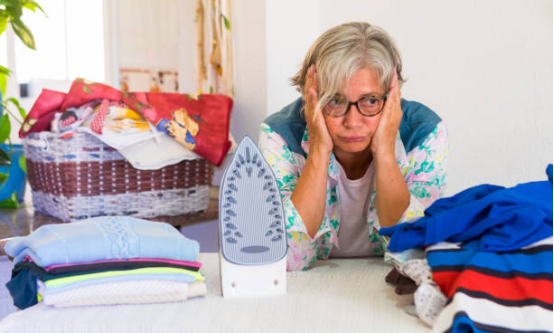
An actionable path to improvement starts with structure rather than willpower.
If the resistance stems from structural problems, then improvements should also begin with structural changes.
The following are some adjustments that have been verified by real users. These are not product recommendations but rather behavioral changes:
First, reduce startup costs
by making the ironing board “readily available” rather than “requiring preparation.” Even reducing just one step of moving or unfolding the board can significantly increase the willingness to use it.
Secondly, the workflow should be restructured
so that all clothes don’t have to be finished at once. Ironing can be integrated into other household chores, such as processing important items immediately after laundry, instead of piling them up all at once.
Third, a stable spatial relationship
should be established to set a relatively fixed location for the ironing action. Even if the space is small, the feeling of “temporary” should be reduced.
Fourth, redefine the goal:
Instead of pursuing “completely wrinkle-free,” focus on highly visible areas such as the neckline and front panel. Lowering the perfection standard actually increases the completion rate.
These adjustments do not require stronger self-discipline but rather make the behavior itself less resistant.
FAQ (Frequently Asked Questions)
Q1: Why do some people particularly dislike ironing boards?
Because they often symbolize “preparation costs” and “space encroachment” and are psychologically categorized as high-burden tools.
Q2: Is ironing really more dreaded than other chores?
From a behavioral psychology perspective, yes. This is because it involves a highly linear process, delayed rewards, and requires a lot of space.
Q3: Will things get better once you get used to them?
Getting used to them can reduce some psychological friction, but if the structural problems remain unchanged, the resistance will only be delayed, not eliminated.
Q4: Why is it that tidying up clothes is not annoying, but ironing is?
Tidying up brings about an immediate change in space, while the results of ironing are often not immediately visible.
Resistance itself is a signal
Disliking ironing doesn’t mean you don’t care about your quality of life.
On the contrary, it’s a signal that your existing tools, processes, or spatial arrangements are conflicting with your lifestyle.
When we re-examine the role of the ironing board in the family, shifting from “a tool that must be tolerated” to “a behavioral node that can be optimized,” many emotions will naturally ease.
Perhaps the real question is never “whether to iron or not,”
but rather whether this task is designed to be worthwhile.