Ironing Board Replacement Cycle: When Is It Time to Upgrade or Replace?

In every home, the ironing board is a silent, unsung hero. How many times have you battled it, rushing to work in the morning or sorting laundry on the weekend? However, this seemingly indestructible companion has its lifespan. So, how do you know when your ironing board is due for an upgrade or replacement? This article will analyze the issues from multiple perspectives to help you make an informed decision.
Frequency of use and daily wear and tear
An ironing board depends primarily on how often it is used. A household that irons a lot of clothes every day will see the board and supporting structure wear out much faster than a household that uses it only occasionally. Common signs of wear include:
- The iron pad on the board is dented or the cloth cover is damaged, resulting in uneven ironing of clothes;
- The bracket shakes or folds unsteadily, posing a safety hazard;
- The rubber feet wear out and tend to slide during use.
Discovering these problems in time not only protects your clothes but also avoids accidental injuries.
According to household goods survey data, the average lifespan of an ironing board in an average household is approximately 5-7 years, while those with frequent use may experience noticeable wear and tear within 3-4 years. Therefore, regular inspections are key to extending its lifespan.
Technology upgrade and function optimization
With the advancement of home appliances, modern ironing boards have seen significant improvements in design and materials. For example:
- The board surface has stronger heat insulation performance, which reduces ironing time;
- Adjustable height and tilt angle to improve ergonomic comfort;
- Equipped with a steam tray or heat-resistant coating for enhanced compatibility, especially suitable for use with steam irons.
If your ironing board doesn’t work effectively with a modern steam iron, or its adjustment functions aren’t flexible enough, it might be behind the market. Upgrading to a newer model will not only improve your ironing efficiency but also reduce the strain on your back caused by the inconvenience of using it.
Smarter design makes ironing easy, saving time and protecting your health.
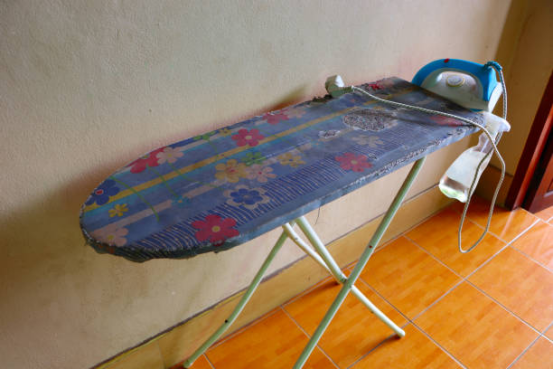
Material aging and safety hazards
brackets, whichLong-term use will cause the board and bracket materials to age, especially metal brackets are prone to rust and loosening of connecting screws, and wooden boards may deform and crack. Common judgment criteria include:
- Obvious cracks or bends appear on the board surface;
- fails.The folding process gets stuck or the lock fails;
- The bracket screws are loose, posing a risk of tipping over.
Changing it early can prevent accidental slips or damage to clothes while ironing.
From a safety perspective, even if the ironing board’s surface covering is intact, if the bracket is unstable, it’s a sign that an upgrade is necessary. Safety always trumps saving money.
Space and storage convenience
Modern families live at a fast pace, and convenient storage has become an important consideration. Old ironing boards can be bulky and heavy when folded, taking up storage space. However, new designs are becoming increasingly lightweight:
- Can be stored vertically or hung on the wall to save space;
- Retractable or with rollers for easier movement;
- The integrated design makes it easy to match your home style.
Improve the convenience of family life and make ironing no longer a burden.
In addition, reasonable storage methods can extend the life of the board and avoid deformation or scratches caused by improper stacking.
Brand and market trend insights
Differentiated competition in the ironing board market is becoming increasingly evident, with high-end brands focusing on material, ergonomics, and accessory innovation. Consumer feedback shows:
- bracket and high-densityThe combination of aluminum alloy bracket + high-density board is more durable;
- A removable and washable cloth cover increases cleaning convenience.
- Tray designs that are compatible with multiple iron types are popular.
If your ironing board doesn’t meet these basic requirements, even if it’s still usable, it could affect your overall ironing experience. Brand upgrades aren’t just about quality assurance; they’re also about improving your daily life efficiency.
Choose the right brand and design for greater comfort and durability.
When should we change decisively?
Taking all of the above factors into consideration, key moments when you should consider upgrading or replacing the ironing board include:
- The board surface is dented and the cloth cover is damaged, which affects the smoothness of ironing.
- The bracket is loose or unstable, posing a safety hazard;
- New features or modern designs can significantly improve efficiency or comfort;
- The material is severely aged and difficult to repair;
- Changes in home space layout or storage needs.
Generally, an assessment should be conducted every 5-7 years of average use, and homes with more frequent use can replace them 3-4 years earlier.
Summary and Recommendations for Action
An ironing board plays an irreplaceable role in household life. Regularly checking its status, monitoring functional upgrades, and keeping an eye on safety hazards and space availability can help make ironing more efficient, safe, and comfortable.
One final reminder: Don’t wait until the board cracks or the bracket collapses before you regret it. Upgrading your ironing board not only improves your quality of life but also protects your family’s safety. In the future, ironing may be a simple tug, making the once tedious task a breeze.