
Do you ever hesitate over that old ironing board every time you’re ready to iron? Many families, facing limited space, tight budgets, and the desire for a stable, reliable ironing surface, turn to used ironing boards. However, choosing a used ironing board is more than just about price. This article will thoroughly analyze the pros and cons of used ironing boards and provide a practical buying guide to help you find the optimal balance between quality, value, and practicality.
Advantages of Second-Hand Ironing Board: Affordability and Environmental Value
The primary advantage of buying a used ironing board is obvious: the price. Compared to a new product, a used board can typically save 30% to 60% of your budget, making it a significant cost savings for those temporarily renting, living in student dormitories, or just moving into a new home. Furthermore, many used ironing boards are well-maintained, fully functional, and even come with original accessories or adjustable height brackets, giving you a near-new experience at a lower cost.
Environmental benefits are also a significant advantage. Choosing used products can reduce resource waste and carbon emissions, contributing to a sustainable lifestyle. In today’s increasingly environmentally conscious society, this “making the most of things” consumption style is becoming increasingly popular.
Some users report that after cleaning and simple repairs, used ironing boards can last almost as long as new ones. Boards with steel or aluminum alloy brackets are particularly durable, often exceeding those made of plastic. Classic models are often available on the used market at competitive prices.
Potential risks: safety and durability concerns
However, used ironing boards aren’t perfect. First, safety risks must be considered. Loose brackets, corroded solder joints, and worn folding mechanisms are common problems on the used market. If the bracket suddenly collapses during ironing, it can damage clothing and potentially cause injury. Therefore, carefully inspect the bracket’s stability and the smoothness of the adjustment mechanism when purchasing.
Secondly, the surface material can also affect the user experience. Old ironing boards may develop rust, pits, or peeling coatings, which not only reduces smooth ironing but can also stain clothing. Frayed or missing covers are also a concern, as direct contact with the metal board can affect clothing safety. Some used ironing boards, especially low-end or off-brand models, may not withstand continuous use with a high-temperature steam iron. These risks must be assessed in advance.
Finally, the cleanliness of second-hand products cannot be ignored. It is best to clean them thoroughly before use to avoid dust, mold, or odor residue that affects indoor air and clothing hygiene.
Buying Strategy: How to Choose a Reliable Second-Hand Ironing Board
- Check the structural stability.
When purchasing, place the ironing board on a flat surface and gently shake it to confirm that the bracket is stable and not loose. When folding and adjusting the height, feel the mechanical resistance to ensure it is even and smooth to avoid any jamming or spring failure. - Observe the board surface and the cover.
A high-quality board surface should be smooth and free of dents, and the metal parts should be free of rust. If the cover is severely worn, consider replacing it, but it’s best to choose a model with a common size on the market so that you can easily purchase a new cover. Some brands also include models with thicker, heat-resistant covers for a better user experience. - Pay attention to weight capacity and frequency of use.
If you need to use a steam iron or large items of clothing, be sure to check the weight capacity of the second-hand iron. Some older models may only be suitable for light ironing, and frequent use of high-power steam irons may shorten their lifespan. - from trusted channels, whether
In a physical secondhand market or online, prioritize sellers with a good reputation or platforms with return policies. Some secondhand furniture stores offer inspection and repair services, which can effectively reduce purchasing risks. - Consider the brand and material.
High-quality steel or aluminum alloy ironing boards are usually more durable and still have reasonable second-hand prices. However, low-end plastic or lightweight models are prone to deformation or damage to the folding mechanism, so choose with caution.
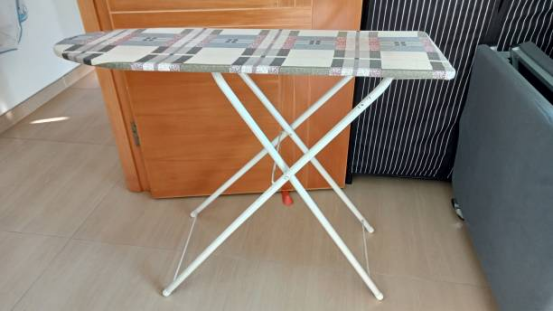
Maintenance and Care: Extending the Life of Used Ironing Boards
Even if you’ve purchased a reliable used ironing board, proper maintenance is crucial. Regularly inspect the bracket screws, folding mechanism, and solder joints, tightening or lubricating as necessary to prevent accidents. Keep the board and cover dry and clean. Cool the steam iron promptly after use to avoid prolonged high-temperature steam exposure to old boards, which can cause corrosion.
If you find slight dents on the board surface or the cover is damaged, you may want to replace it with a high-temperature wear-resistant cover or install a thin insulation pad. This will not only extend the service life but also improve the ironing experience.
Market trends and buying recommendations
The used furniture and homewares market has matured in recent years, particularly on secondhand trading platforms in major cities. High-quality ironing boards often sell for 40%-60% less than new items. Some professional sellers even offer cleaning, repairs, and functional testing, reducing the uncertainty of buying used items.
From a long-term perspective, if you don’t mind a little tinkering, a used ironing board is a cost-effective and environmentally friendly option. However, for families seeking ultimate comfort or frequent, high-end use, a new, high-end model still offers advantages.
Summarize
Choosing a used ironing board is a balancing act between cost-effectiveness and risk. By carefully examining the structure, surface, and cover; choosing a reliable source; and maintaining it properly, you can secure a stable and practical ironing platform while saving costs and supporting the environment. For families on a limited budget or for occasional use, a used ironing board is undoubtedly a worthwhile option. Frequent users, however, should carefully select based on its load-bearing capacity and durability.
To learn more about ironing boards, check out our other articles. In the future, whether new or used, with the right selection strategy, every ironing session can become an easy, smooth chore.