How anti-rust coatings are revolutionizing the durability of ironing boards

Ironing boards have evolved into products that combine functionality and engineering aesthetics. Among all the factors affecting their lifespan, the “anti-corrosion coating” is becoming one of the most important details for designers and users. You might not imagine that a seemingly ordinary coating can determine whether an ironing board can survive for ten years in a humid environment.
The Enemy of Ironing Boards – The Dual Test of Time and Humidity
The metal structure provides ironing boards with stable support, but it also exposes them to the risks of oxidation and corrosion. According to data released in 2024 by the European Appliance Durability Association (EADA), over 62% of users reported “surface spots” or “rusted supports” on ironing boards that were not treated with rust prevention after two years of use. Especially in coastal or high-humidity areas, the salt in the air accelerates the oxidation reaction on the metal surface, making the supports unstable and even affecting the safety of ironing.
The application of rust-preventive coatings stems from these pain points—it’s not just a surface decoration, but an extension of materials technology. The coatings used in modern ironing boards typically combine polyester powder coating and epoxy resin, which are electrostatically sprayed and then cured at high temperatures to form a dense protective film that effectively blocks air and moisture.
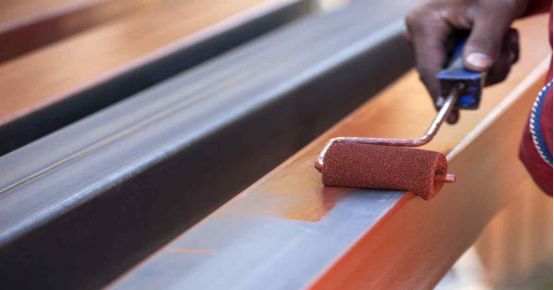
The Science and Durability Logic Behind Coating Technology
The development of rust prevention technology is almost a history of the evolution of materials science. Over the past decade, corrosion prevention technology has undergone three core iterations—from single-layer metallic paint to double-layer electrostatic powder coating, and now to nanocomposite coating systems. This is not just a technological breakthrough, but also a manifestation of a philosophy of durability.
The latest generation coating forms a micron-sized polymer protective layer on the iron support surface, enabling it to withstand over 500 hours of salt spray testing, which is equivalent to more than ten years of daily life by international standards. More importantly, this protective film reduces weight while maintaining mechanical strength, making the entire Ironing Board support frame lighter—meaning easier handling and a smoother user experience.
The Hidden Value of Extending Service Life
From a business perspective, rust-resistant coatings not only enhance product durability but also build long-term trust in the brand. Consumers don’t always focus on the internal metal finishing of ironing boards, but they can directly experience the feeling of “looking new even after prolonged use.” In fact, consumer satisfaction surveys in European and American markets show that ironing boards with high-level rust protection have an average lifespan extended by nearly 40%.
For households, this means less frequent replacements and lower long-term costs; for brands, it represents higher repurchase rates and positive word-of-mouth. As the German Institute for Home Furnishings Design (GDI) points out, “Modern families are placing greater emphasis on the durability and sustainability of products, which has become a new consumer trend in the home appliance industry.”
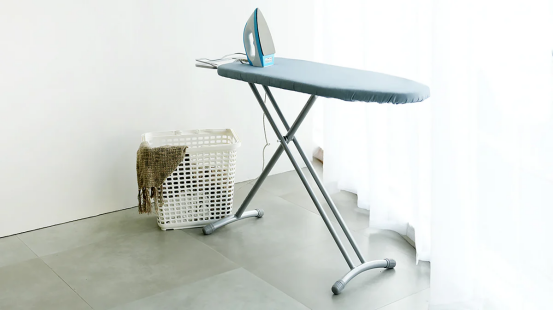
When rust prevention becomes part of aesthetics
Traditionally, rust-proof coatings were often considered a hidden technical detail; however, they are increasingly being integrated into product design. Designers are experimenting with combining coating technology with visual textures, such as using matte powder coats to create a warm, smooth feel, or metallic gloss finishes to achieve a sophisticated look. This not only makes ironing boards more durable but also more stylish.
Some brands are even exploring combining environmental protection concepts with rust prevention technology, using low-VOC materials or renewable resins to reduce chemical residues—such innovations are winning new attention for products in the field of sustainable design.
Maintain rust prevention performance as good as new
Even the most advanced coatings require routine maintenance to extend their lifespan. When using an ironing board, users should avoid direct contact with strong acidic cleaners or metal brushes. It is recommended to regularly wipe away dust with a slightly damp cloth and store the ironing board in a dry environment. For ironing boards that will not be used for extended periods, a moisture-proof pad or silicone desiccant bag can be added to the bottom of the stand; these small actions can significantly slow down metal aging.
Interestingly, some European families are even “recoating” their old ironing boards, re-spraying them with rust-preventive powder, and continuing to use them for more than five years. This DIY maintenance method is gradually gaining popularity on social media, demonstrating people’s emotional connection to high-quality home furnishings and their sustainable mindset.
From rust prevention to intelligent protection
Future ironing boards may no longer rely solely on traditional rust-preventive coatings. With the increasing prevalence of smart homes, manufacturers are researching “self-healing coatings”—where internal nanocapsules automatically release a protective agent to repair oxidized areas when minor scratches appear on the surface. This technology has already been successfully tested in the automotive industry and is expected to be gradually applied to residential metal structures within the next three years.
Meanwhile, the integration of artificial intelligence and materials science allows manufacturers to predict corrosion rates under different humidity conditions through data models, thereby selecting the most suitable protective formula for ironing boards. In other words, future ironing boards will have a “rust-proof brain.”
When durability becomes a way of life
The rust-resistant coating on the ironing board may seem small, but it reflects the modern home’s pursuit of quality, technology, and responsibility. In an era that values convenience and speed, true competitiveness comes from “invisible patience”—that thin protective film is the brand’s promise of durability and the user’s commitment to a high quality of life.
Delve into the diverse knowledge of the Ironing Board and explore the scientific power that makes life more resilient and beautiful.