
In any clothing studio or craft space, the layout of the ironing board plays a crucial role. Whether you’re in a fashion studio, a tailor shop, or a DIY workshop, ironing is an essential step. Properly organizing and using the ironing board can not only improve efficiency but also enhance the flow of your creative process. In this article, we’ll explore how to achieve an efficient ironing board layout in a studio environment and share some practical tips to help you optimize your workspace organization.
Why is the ironing board in a studio so important?
For professionals in the apparel, handicraft, and creative design industries, the ironing board is more than just a tool; it’s a crucial component of the creative process. Ironing clothes, fabrics, and materials is not merely a detail; it directly impacts the overall effect of the work. However, a poorly arranged ironing workspace can waste time and disrupt workflow. Therefore, a well-designed ironing board layout can not only improve efficiency but also enhance the creative environment and overall work experience.

Ideal Ironing Board Layout for Studios: Maximizing Space and Enhancing Efficiency
To ensure the ironing board functions effectively in the studio, several factors need to be considered. Here are some key suggestions for designing an efficient layout:
1. Choose a suitable location
Creating an efficient ironing board workstation starts with choosing the right location. This location should be spacious enough to allow for free movement around the ironing board without interfering with other workstations or storage areas. Ideally, the ironing area should be close to the cutting and sewing workbenches, but not too close to avoid mutual interference.
Tip:
- Avoid high-traffic areas: Try to place the ironing board in a location with less interference to avoid frequent interruptions during operation.
- Easy to access without obstructing other operations: Choose an easily accessible location while avoiding interfering with other important work areas, such as storage shelves or workbenches.
2. Choose a compact or wall-mounted ironing board.
In many studios, space is often limited. For smaller rooms or workshops, opt for a compact, foldable design that can be easily stored away when not in use. Modern models now also offer wall-mounted options that allow you to fold them up, keeping your space organized and clutter-free.
Why compact designs are useful:
Easy to move: A foldable or compact design makes it simple to relocate to the ideal workspace.
Space-saving: These foldable options can be tucked away when not in use, freeing up more room for other activities.
Flexible design: Adjustable height allows you to customize the setup for comfort, no matter your task.
3. Consider ergonomics to improve work comfort.
Comfort is paramount when you need to work for extended periods. Ensure your ironing board is at the correct height to avoid unnecessary physical strain from prolonged bending or excessively high postures. An adjustable-height ironing board is a good option.
Ergonomic tips:
- Standing workstation: Set the ironing board to a height suitable for you to stand and work, avoiding discomfort caused by bending over.
- Add an anti-fatigue mat: If you stand for long periods of time, an anti-fatigue mat can effectively reduce the pressure on your legs and feet.
- Maintain a comfortable working posture: Ensuring your ironing station can be used for extended periods without discomfort is crucial for improving work efficiency.
4. Arrange tools and materials nearby.
An ironing board depends not only on the board itself but also on the arrangement of related tools and materials. Avoid frequently running to other places to retrieve tools during ironing; instead, keep all commonly used tools and materials in easily accessible locations.
How to keep tools readily available:
- Storage shelves or drawers: Install storage shelves or drawers near the ironing area to store ironing tools, such as spray, starch, or a steamer.
- Hooks or hanging boards: Use hooks or hanging boards to hang tools such as irons, brushes, and fabrics to avoid clutter.
- Transparent storage boxes: Store fabrics or garments in transparent storage boxes for easy identification and retrieval.
5. Simplify the ironing process
In professional garment studios or craft spaces, time management is crucial. By integrating ironing into your workflow, you can reduce unnecessary time wastage and improve efficiency.
Workflow optimization tips:
- Bulk ironing: Iron multiple items at once whenever possible to avoid frequent movement between the work area and the ironing station.
- Pre-sort: Sort fabrics and garments by type before ironing to reduce the time spent adjusting iron settings.
- Efficient ironing: Keep the ironing board area tidy, avoid clutter during the ironing process, process clothes in priority order, and reduce unnecessary adjustments.
6. Integrated professional ironing process
In large studios, the ironing area should be seamlessly integrated into the overall workflow. In some commercial studios, ironing stations are often integrated into a highly efficient production line, with all steps meticulously managed to improve efficiency.
Considerations for professional ironing techniques:
- Zoned ironing: In a large studio, different types of ironing can be done in zones, with special settings for lightweight fabrics, heavy fabrics, and delicate fabrics.
- Dedicated steam station: Set up a separate steam area for delicate fabrics or fabrics that require more moisture, and avoid mixing them with regular ironing.
- Preparation and sorting area: Separate the work areas for ironing, sorting, and finished product storage to make the entire workflow smoother.
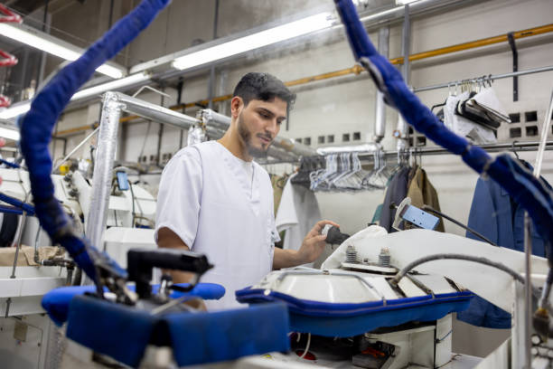
Maintain your ironing board.
In a studio environment, frequently used ironing boards require regular maintenance to ensure they remain in optimal condition over the long term. A clean and well-maintained ironing board not only improves work efficiency but also extends its lifespan.
Maintenance Tips:
- Regular cleaning: Keep the surface of the ironing board clean to avoid affecting the ironing effect due to accumulated stains or burn marks.
- Replace the cover: As the ironing board is used over time, the cover may become damaged. Replacing it in a timely manner will keep it in optimal condition.
- Organize the iron rack: Keep the iron rack tidy to avoid clutter affecting work efficiency or causing accidents.
Improve studio efficiency by optimizing the ironing board layout.
Whether you’re a fashion designer, tailor, or DIY enthusiast, a well-planned ironing board layout is crucial for improving studio efficiency. By carefully designing the ironing area layout, optimizing ergonomics, and maintaining a smooth workflow, you can effectively increase productivity and enjoy a more fluid and comfortable creative process.
By applying layout techniques to your studio, you can not only maximize space utilization but also ensure that every piece of work is carefully crafted and showcases its best results.
Learn more about ironing board tips and get more professional layout design inspiration. Whether you need a compact solution or want to integrate a professional ironing flow, we can provide the right help for you.