
In today’s urban daily life, the meaning of “cleanliness” is quietly changing.
It no longer refers to the neat lines of clothes after they have been carefully smoothed out, nor does it mean spending time with a shirt or trousers. Instead, it is more like a visual “acceptable state”: no obvious wrinkles, no odor, and ready to go out immediately.
It is against this backdrop that the ironing board has gradually been moved out of the center of life.
It has not disappeared but has been pushed into a corner—folded, leaned against, remembered, and then ignored, as if representing a “slow” lifestyle, a slowness that seems out of place in a fast-paced society.
But the issue isn’t just about “whether or not there’s time to iron clothes.”
The real conflict lies between the pace of life, modern laundry habits, and profound changes in people’s attitudes toward clothing.
When “quick wash, quick wear” becomes the default option
The evolution of laundry behavior is the first key to understanding the marginalization of the ironing board.
In the past, laundry was a complete process: washing, drying, ironing, and storing.
Now, this process has been continuously compressed until only two actions remain: washing and wearing.
This shift is no accident.
Shrinking urban living spaces, longer commutes, and the prevalence of multitasking have made laundry less of a part of life and more of a back-office task that must be completed as quickly as possible. Modern laundry habits emphasize efficiency, automation, and “it just needs to look okay.”
In this logic, the ironing board seems too “ritualistic.”
It requires unfolding, occupies space, and demands several minutes or even longer of focused attention, which directly clashes with the “wash and go” rhythm.
At the same time, the widespread use of quick-drying fabrics, wrinkle-resistant fibers, and washer-dryer combos is constantly diminishing the necessity of ironing.
When clothes are designed to be “iron-free,” ironing boards are naturally considered superfluous.
However, this transformation is not entirely equivalent to “progress.”
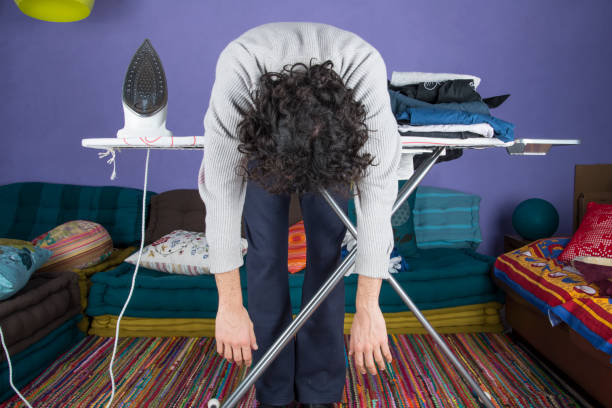
Fast fashion changes more than just clothes.
From the perspective of fast fashion care, the decline of ironing actually reflects a change in people’s relationship with clothing.
Fast fashion emphasizes speed of updates, not lifespan.
How many times a piece of clothing is worn or washed is often unimportant; what matters is whether it can still meet the needs of the next social or work occasion. Under this logic, clothing is regarded as a “consumable,” rather than an item that requires long-term maintenance.
Ironing Board represents a different set of values.
It signifies attention to the fabric’s condition, control over details, and a proactive approach to extending its lifespan. Ironing is not just about making it “flat,” but about using heat and pressure to restructure the fibers, allowing garments to remain wearable even after multiple washes.
As fast fashion care becomes mainstream, ironing is naturally labeled as “time-consuming, unnecessary, and inefficient.”
This is why many users don’t explicitly reject ironing boards but rather gradually forget about their existence after prolonged periods of non-use.
Interestingly, ironing remains irreplaceable in situations where clothing requirements are higher—such as formal work occasions or the need to wear specific fabrics.
It’s just that it’s no longer a daily routine but rather a tool that’s “only thought of when necessary.”
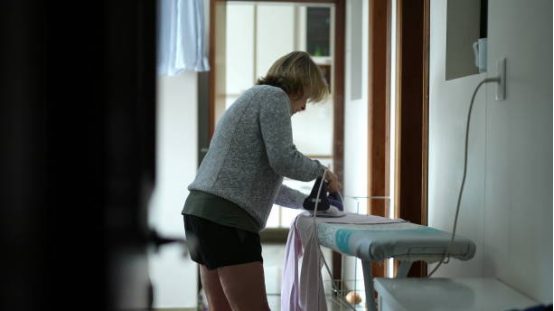
Ironing out a lifestyle change is not simply about disappearing.
If we shift our focus from “whether to iron” to “how to iron,” the role of the ironing board is actually undergoing a structural change.
In traditional households, ironing boards are usually a fixed fixture, placed in a corner of the storage room or balcony, and used periodically and frequently.
However, in today’s ironing lifestyle change, it is more like a tool that appears on demand: it is only used for specific clothes, specific occasions, and specific situations.
This change doesn’t mean ironing is being rejected, but rather that it’s being redefined.
It’s shifting from a daily obligation to a meticulous care practice for “critical garments.”
Feedback from some users corroborates this.
In online discussions and lifestyle communities, a growing number of people are mentioning that they no longer iron all their clothes but instead focus on specific areas like suit jackets, shirt fronts, or easily wrinkled natural fibers. In this usage, the ironing board’s presence becomes more focused and targeted.
This also explains a seemingly contradictory phenomenon:
The frequency of ironing has decreased, but discussions about ironing quality, posture, and efficiency have not disappeared.
What’s being overlooked isn’t the tools, but the rhythm.
The real issue worth discussing is not whether the ironing board is “outdated,” but rather how we understand the relationship between time and the pace of life.
A fast-paced life doesn’t mean rejecting all slow activities.
It’s more about constantly filtering: which slow activities are worthwhile, and which can be abandoned.
The problem with ironing is that it is often categorized as “slow and unprofitable.”
There is no immediate return, efficiency cannot be quantified, and it may even be considered merely a visual self-satisfaction.
However, from the perspective of long-term use and garment maintenance, ironing is actually a form of structural saving.
It reduces premature discarding due to wrinkles and deformation, allowing garments to maintain their shape even after multiple washes. This value is not immediately apparent, but it gradually becomes apparent over time.
the Ironing Board here is no longer a mandatory lifestyle arrangement but rather a choice.
Whether it is used depends on how an individual defines “something worth spending time on”.
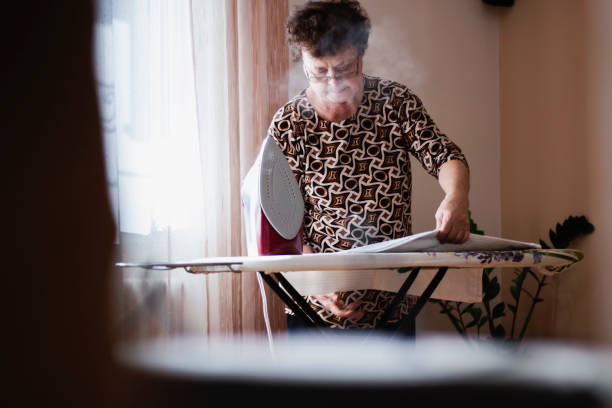
Rethinking the Existence of the Ironing Board
life.In the current context, the Ironing Board may not need to return to the center of life,
but it also doesn’t need to be completely abandoned.
ItIt is better understood as a “flexible tool”:
it exists in a fast-paced environment but does not create a burden; it appears when needed, rather than requiring continuous investment.
This positioning does not conflict with modern laundry habits; rather, it complements them.
When washing and drying are greatly simplified, ironing becomes the last “human intervention” step, used to correct details that machines cannot handle.
It wasn’t just the ironing board that was folded up.
The ironing board was folded, leaned against the wall, and put away, seemingly having stepped off the stage.
But what it truly put away was perhaps the lifestyle of being willing to stop and appreciate the details.
In an era that emphasizes speed and instant feedback, any action that requires “one extra step” seems out of place.
Ironing is precisely such an extra step, forcing people to slow down and take another look at the clothes they are about to wear.
The issue isn’t whether to continue using the ironing board.
It’s whether, as life accelerates, we’re still willing to reserve space for certain details to unfold.
Perhaps, the next time you see that board leaning against the corner, the real question isn’t whether or not to iron clothes, but rather:
What things are worth slowing down a little for now?