
In our daily lives, neat clothing is often seen as a reflection of a person’s quality of life and professional image. A reliable ironing board is essential for keeping clothes looking pristine and new. However, have you ever considered that this seemingly simple household item actually has a long and interesting history? This article will explore the origins of the ironing board, its development, and its role in modern life.
What is an ironing board?
An ironing board, commonly known as an “ironing board” in Chinese, is a support tool specifically used for ironing clothes. It usually consists of three basic parts:
- Board Surface: A flat, heat-resistant panel, usually made of metal mesh or wood, covered with a cotton or high-temperature-resistant fabric cover to ensure uniform pressure and better steam penetration when ironing clothes.
- Support structure (legs/frame): A foldable or fixed support frame that provides stability for the board and facilitates storage.
- Optional Accessories: such as an iron tray, sleeve board, or clothes hanger, to further improve ironing efficiency.
Through these designs, the ironing board not only makes ironing more convenient but also ensures the safety of clothes and operators.
The Origin of Ironing Board
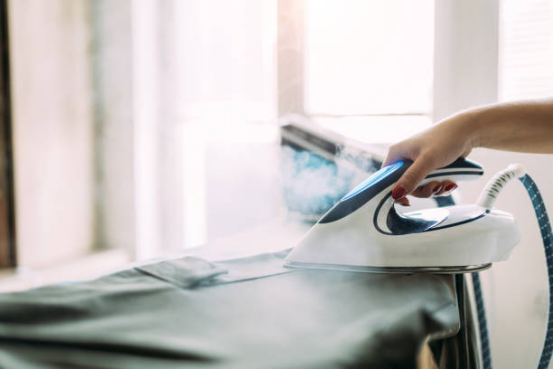
The history of the ironing board dates back to the early 19th century, when ironing clothes was primarily done by laying the cloth flat on a table or bed. Early irons were mostly charcoal-fired, which were not only cumbersome to use but also prone to burns to clothing and the user.
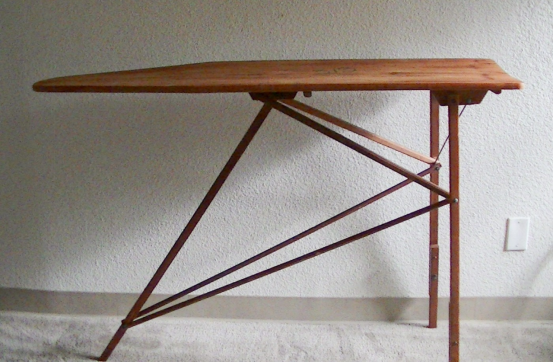
To improve this situation, people began experimenting with ironing surfaces mounted on a support frame, which became the earliest prototype of the ironing board. Initially, these boards were mostly made of wooden planks, supported by simple wooden legs. They were foldable but heavy. By the early 20th century , with the widespread use of steam irons, the ironing board began to evolve into its modern form:
- Metal mesh panel : allows steam to penetrate clothing more easily while reducing weight.
- Foldable design : easy to store and carry.
- Height adjustable : adapts to users of different heights and improves comfort.
During this period, the ironing board gradually evolved from a household aid to an indispensable item in home life.
The Evolution and Modern Form of Ironing Board
With the development of industrialization and home design, ironing boards are no longer just practical tools, but also incorporate more innovative designs:
Folding and wall-mounted
In order to save space, modern ironing boards mostly adopt a folding design, and some boards can even be hung on the wall, which is convenient for use in small households.
Portable ironing boards,
small desktop boards and travel ironing boards make it easy to meet ironing needs during business trips and travel.
Ergonomic and comfortable,
The board and bracket are height-adjustable and equipped with non-slip foot pads and thick covers, making ironing no longer tiring and in line with the modern family’s pursuit of a comfortable life.
Creativity and versatility:
Some ironing boards are beginning to incorporate auxiliary storage functions and detachable accessories and can even be creatively transformed for home DIY or storage purposes.
The role of the ironing board in modern life
In today’s households, ironing boards have transcended the simple role of ironing clothes and now carry the following values:
- Improve clothing quality: keep clothes flat, reduce wrinkles, and extend their service life.
- Save time and labor: The rationally designed board surface and height make ironing more efficient and easier.
- Home Aesthetics: Modern panel and cover designs can be integrated into your home style and even become part of your home decoration.
- Multi-scenario application: In addition to traditional ironing, creative use can also give old ironing boards new life, such as transforming them into storage racks or workbenches.
It can be said that the ironing board has become a practical and beautiful life assistant in modern families.
Summarize
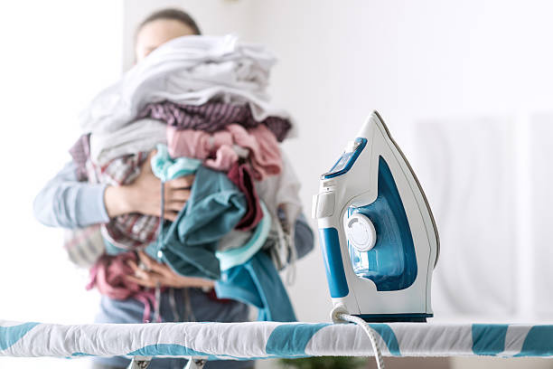
From 19th-century wooden boards to modern foldable, portable, and ergonomic designs, the evolution of ironing boards reflects people’s pursuit of convenience and comfort. They not only keep clothes looking pristine but also make the ironing process safe and efficient and are gradually becoming an integral part of home aesthetics.