
In cramped apartments or environments with frequent moves, a lightweight ironing board not only saves space but also makes everyday ironing more flexible and efficient. With advancements in home engineering and materials science, designers and engineers are constantly exploring the application of aluminum alloys and composite materials in ironing boards, giving new life to traditionally bulky ironing tools. This article will delve into the engineering concepts, material selection, and practical value behind lightweight ironing boards.
The core objective of the lightweight ironing board is to balance portability and stability. While traditional steel structures are sturdy, they are inconvenient to move and store. The introduction of aluminum alloys and high-performance composite materials allows the ironing board to reduce its weight by approximately 30%-50% while maintaining its load-bearing capacity. This innovation not only reduces the burden of moving the board for home users but also improves storage flexibility. Data shows that the lightweight design of the ironing board requires significantly less physical effort during folding and unfolding, optimizing the user experience when ironing clothes for extended periods.
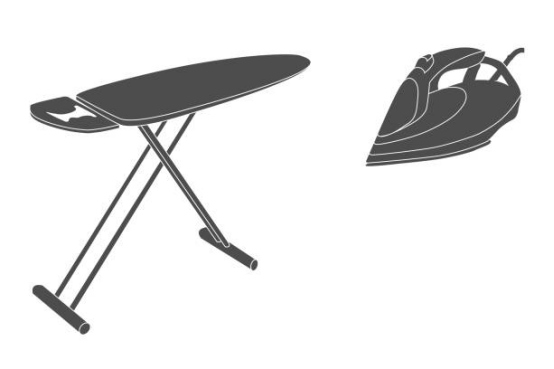
Application of aluminum alloys in ironing boards
Aluminum alloys are widely used in lightweight ironing board frames due to their lightweight and high-strength properties. Compared to ordinary steel, aluminum alloys have only two-thirds the density of steel, yet still possess excellent corrosion resistance. In practical engineering design, optimizing the cross-sectional shape of aluminum alloy tubing can further enhance the bending resistance of the frame, ensuring the ironing board remains stable even when carrying heavy clothing. Online data shows that most high-end ironing boards use aluminum alloy tubing with a diameter of 18-22 mm and a wall thickness of 0.8-1.2 mm, perfectly balancing lightweightness and durability.
In addition to structural strength, aluminum alloys also offer advantages in thermal conductivity. In steam ironing environments, the frame dissipates heat quickly, reducing material fatigue caused by heat buildup. Engineers incorporate localized thickening or reinforcement in the design to provide extra strength to critical load-bearing components such as support legs and folding hinges while maintaining an overall lightweight profile. This material choice reflects a philosophy that prioritizes functionality while maximizing material efficiency.
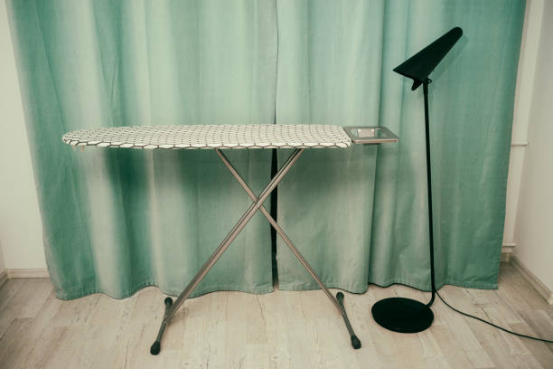
Composite materials enhance portability and durability
Beyond metallic materials, the introduction of composite materials has opened up more possibilities for ironing board design. High-performance composite materials such as carbon fiber and glass fiber reinforced polymers have low density and good toughness, enabling them to withstand the impacts and bending of daily use. Especially in folding ironing boards, composite materials can reduce hinge wear and extend service life. User feedback shows that ironing boards made of this type of material have a significantly lower deformation rate than traditional steel frame products during repeated handling and folding, resulting in improved overall stability.
Composite materials can also be optimized through surface texture and coating to increase friction and improve the anti-slip experience during ironing. Simultaneously, the breathable design combined with a lightweight frame allows steam to diffuse more easily, reducing the time it takes for clothes to absorb moisture and improving ironing efficiency. This design not only reflects materials engineering technology but also addresses the actual needs of users in various scenarios.
Engineering optimization and user experience
Lightweight ironing boards not only focus on material selection but also emphasize structural optimization and ergonomic design. Foldable design, adjustable height, and multi-point support systems are key aspects of engineering innovation. Through finite element analysis (FEA) and fatigue testing, designers can minimize overall weight while ensuring load-bearing capacity. Real-world examples show that a well-designed lightweight ironing board can support over 20 kg while weighing only about 4.5 kg, significantly lower than the 7-8 kg of traditional steel frame products.
In daily use, the portability brought by the lightweight design is obvious: it’s easier to move, more flexible to store, and easier to iron. Especially for users of small apartments, it can be easily slid into a closet or corner after folding, solving the problem of space occupation. This optimization of user experience is also one of the core goals of engineering design innovation.
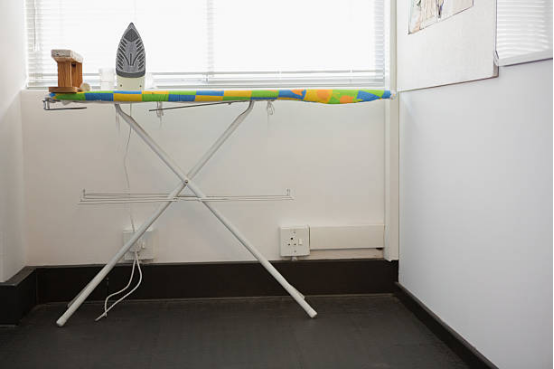
Collaborative innovation of materials and design
..The innovation of lightweight ironing board is not merely a revolution in single materials but rather the result of the synergy between material properties and structural design . Aluminum alloy provides a robust framework, composite materials enhance the toughness of critical areas, and breathable mesh or lightweight panels improve heat dissipation and vapor permeability. This multi-material synergistic design ensures that Ironing Board strikes a balance between lightness, strength, and durability. Simultaneously, engineers consider corrosion resistance, surface coatings, and welding techniques in the design to extend the product’s lifespan.
Based on feedback from real users, these lightweight ironing boards reduce fatigue during daily handling while maintaining both ironing efficiency and safety, significantly improving the overall ironing experience. This improvement is not only in terms of materials but also a direct result of engineering innovation impacting lifestyle.
Conclusion and In-depth Thinking
ironing board, The lightweight ironing board’s engineering innovations showcase the potential of combining materials science with user experience. The judicious use of aluminum alloys and composite materials achieves a delicate balance between portability, durability, and stability, while structural optimization and heat dissipation design enhance ironing efficiency. If you’d like to learn more about the technical details and material selection strategies of the ironing board, come to us for an in-depth analysis of the innovative engineering design of this home ironing tool.
In this era of lightweight design, are you willing to rethink the engineering wisdom behind the design of each ironing board that supports your daily life?