Key points for operating an ironing board with a wide-shouldered coat and heavy fabric.

In the fashion world, nothing embodies structure and elegance quite like a well-tailored, wide-shouldered coat or a garment made of heavy fabric. However, these garments often present some challenges in care, especially during ironing. Due to their thickness and weight, special attention needs to be paid to ironing techniques to ensure the garment retains its shape and appearance after each ironing. Fortunately, understanding how to handle these heavy fabrics on an ironing board can make things easier and keep these garments in perfect condition.
This article will introduce the correct techniques for ironing wide-shouldered coats and other heavy fabrics such as knits. We will explore how to properly distribute ironing pressure, how to support the fabric, and how to utilize the support provided by an ironing board to ensure that garments are not damaged during ironing.
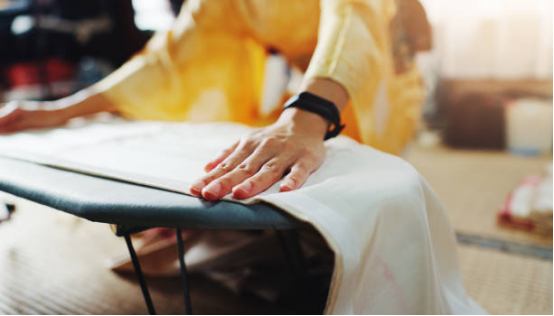
Why proper ironing techniques are crucial for structured garments
For structured garments like wide-shouldered coats, the challenge lies not only in eliminating wrinkles but also in maintaining the garment’s shape and design. Heavy fabrics require more care than lighter ones; improper handling can damage the fabric or deform the garment’s structure. Similarly, heavy fabrics like wool, tweed, or thick cotton are prone to severe wrinkling due to their high density.
Ironing isn’t just about aesthetics; it’s also about extending the lifespan of your garments. Leaving the iron on for too long or using the wrong ironing method can cause fabrics to fade, shrink, or even burn. Conversely, uneven pressure will also result in unsatisfactory ironing, leaving an uneven finish. By understanding how to address these challenges, you can ensure your garments look better and last longer during ironing.
Choose an ironing board suitable for heavy fabrics.
While an ironing board may seem like just an ordinary household tool, its role is crucial when ironing heavy fabrics. Here are some key factors to consider when choosing or adjusting an ironing board:
Panel support and stability
When handling heavy coats and fabrics, the stability of the ironing board is crucial. An unstable or flimsy ironing board makes it difficult to apply even pressure, resulting in incomplete ironing or an uneven fabric surface. A sturdy and structurally stable ironing board ensures that the fabric is well supported throughout the ironing process, especially structural areas such as shoulders, collars, and seams.
A large ironing board is especially suitable for handling larger garments like wide-shouldered coats. The extra space allows for easier handling without the need for frequent adjustments to the garment’s position, thus avoiding damage to the fabric’s texture.
padding and fabric
The padding on the ironing board should be thick enough to support heavier fabrics without being too thin during ironing. If the padding is too thin, it may not provide enough support for heavy coats, resulting in uneven pressure. Additionally, the fabric of the ironing board should be made of a heat-reflective material to improve the iron’s heat transfer efficiency and reduce ironing time.
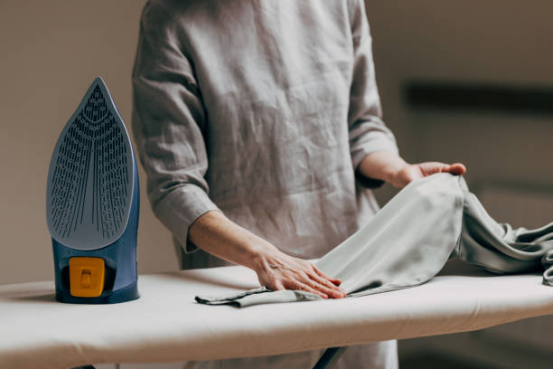
Ironing techniques for heavy fabrics, coats and knitwear
Step 1: Set an appropriate temperature
Before ironing, always check the garment’s care label to understand the appropriate ironing temperature for the fabric. Different fabrics have different heat resistance, so you need to adjust the iron temperature according to the fabric’s characteristics. Heavy fabrics such as wool, tweed, or thick cotton usually require a medium-high temperature setting, but please always refer to the recommendations on the care label to avoid damaging the fabric with excessively high temperatures.
Step 2: Use steam to enhance the effect
Steam is especially effective when ironing heavy fabrics. Steam loosens the fabric fibers, making wrinkles easier to remove. Additionally, steam helps maintain the structure of clothing, particularly around the shoulders and neckline. If your ironing board has a steam function, take full advantage of it. If not, a steam iron or external steam generator will achieve the same effect.
Step 3: Pressure Distribution and Plate Position
Avoid applying excessive pressure to any single area, as this can prevent the fabric from changing its shape, especially for structured garments like wide-shouldered coats. When ironing, apply gentle, even pressure to ensure each section is thoroughly ironed without damaging its structure.
When working on garments with wide shoulders, place wide-shouldered jackets above the ironing board, slightly suspending the shoulders to mimic the natural shoulder curve. This not only maintains the garment’s shape but also makes ironing these heavier areas easier. For the rest of the jacket, hang it along the edge of the ironing board to allow the fabric ample room to expand and to better control pressure.
Step 4: Focus on seams and neckline
Seams and necklines are the areas that require the most special attention when working with heavy fabrics, as they are typically stronger and denser, necessitating meticulous ironing. When working on the neckline, it’s best to start ironing from the inside and gradually work outwards; this helps maintain the neckline’s shape. For shoulder seams, apply light pressure along the seam line to avoid excessive stretching or deformation.
Step 5: A Perfect Finish
After completing the main ironing, remember to check every detail of the garment to ensure no wrinkles are missed, especially on cuffs, linings, or other small areas. If necessary, gently press with a steam spray or ironing cloth to ensure the garment surface is smooth and like new.
Ironing techniques for different fabric thicknesses
Wool and Tweed
When ironing wool and tweed, use a lower temperature to avoid shrinkage or damage. Wool fabrics wrinkle easily, so steam is the best choice for handling them. When ironing, it’s best to place a thin cloth between the iron and the fabric to prevent direct contact and damage.
cotton and linen
Cotton and linen are relatively durable, but they still require careful handling. These fabrics can withstand slightly higher temperatures, but to avoid scorching or damage, it is recommended to use more steam and reduce direct contact time. For ironing boards with an extra padding layer, you can apply appropriate pressure when ironing to help remove deep wrinkles.
Maintain your ironing board with your iron.
Regular maintenance of the ironing board and iron is key to ensuring they maintain good performance over the long term. Especially when ironing heavy fabrics, ensure the iron is clean and free of mineral deposits to guarantee effective steam output. Additionally, regularly inspect the surface and padding of the ironing board to ensure there is no wear and tear, which could affect pressure distribution.
Summarize
Ironing wide-shouldered coats and other heavy fabric garments is a skillful art, requiring not only the right tools and techniques but also meticulous attention to detail. By choosing the right ironing board, proper steam management, and even distribution of ironing pressure, you can maintain the garment’s perfect shape. Whether preparing for a business meeting or attending an important social event, mastering the art of ironing heavy fabrics will ensure you look neat and appropriate.
By combining the right techniques and equipment, you can not only keep your clothes looking their best but also extend their lifespan, making them a long-term investment in your wardrobe. Remember, a neatly ironed coat or suit isn’t just about looking good; it also makes you feel confident and sophisticated when you wear it.